

UPDATE Feb 12: Some of the data in the article was outdated and extrapolated. Thanks to feedback, I’ve double checked and here are the actual data points that changed:
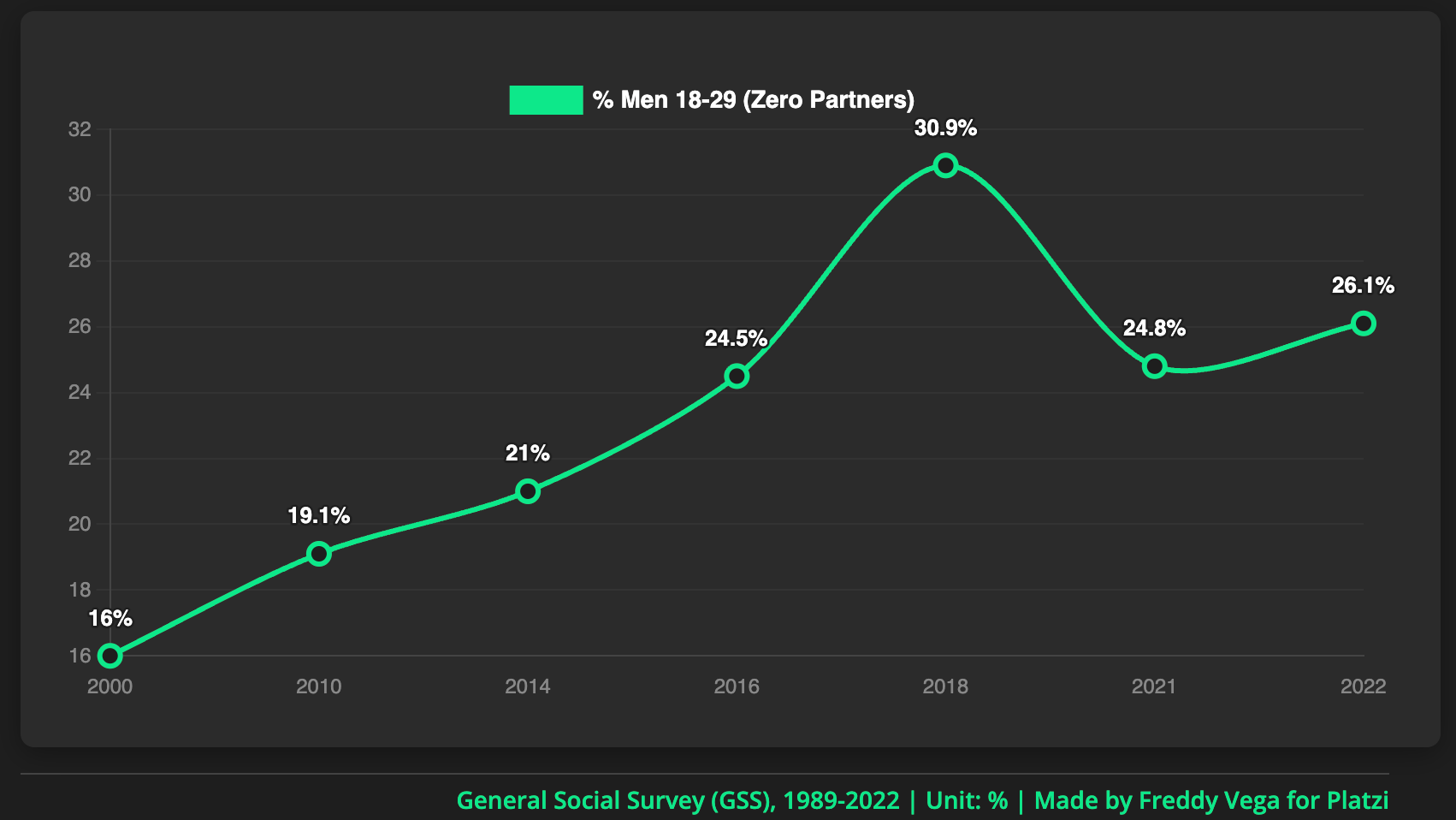
There’s a regression to the mean in terms of young men with zero partners.
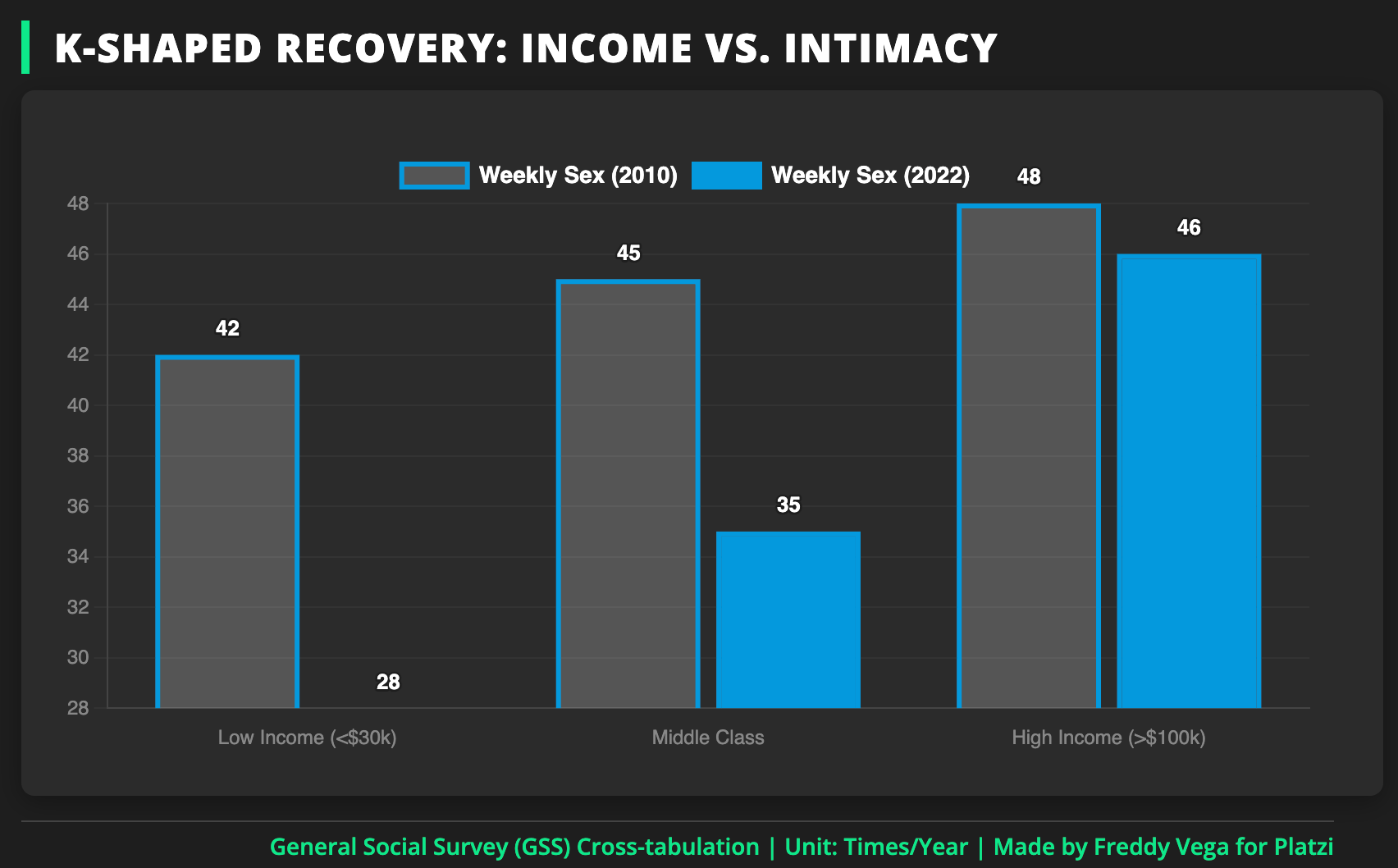
And most of the sexual recession is affecting low-income groups more than high-income groups.
ORIGINAL POST:
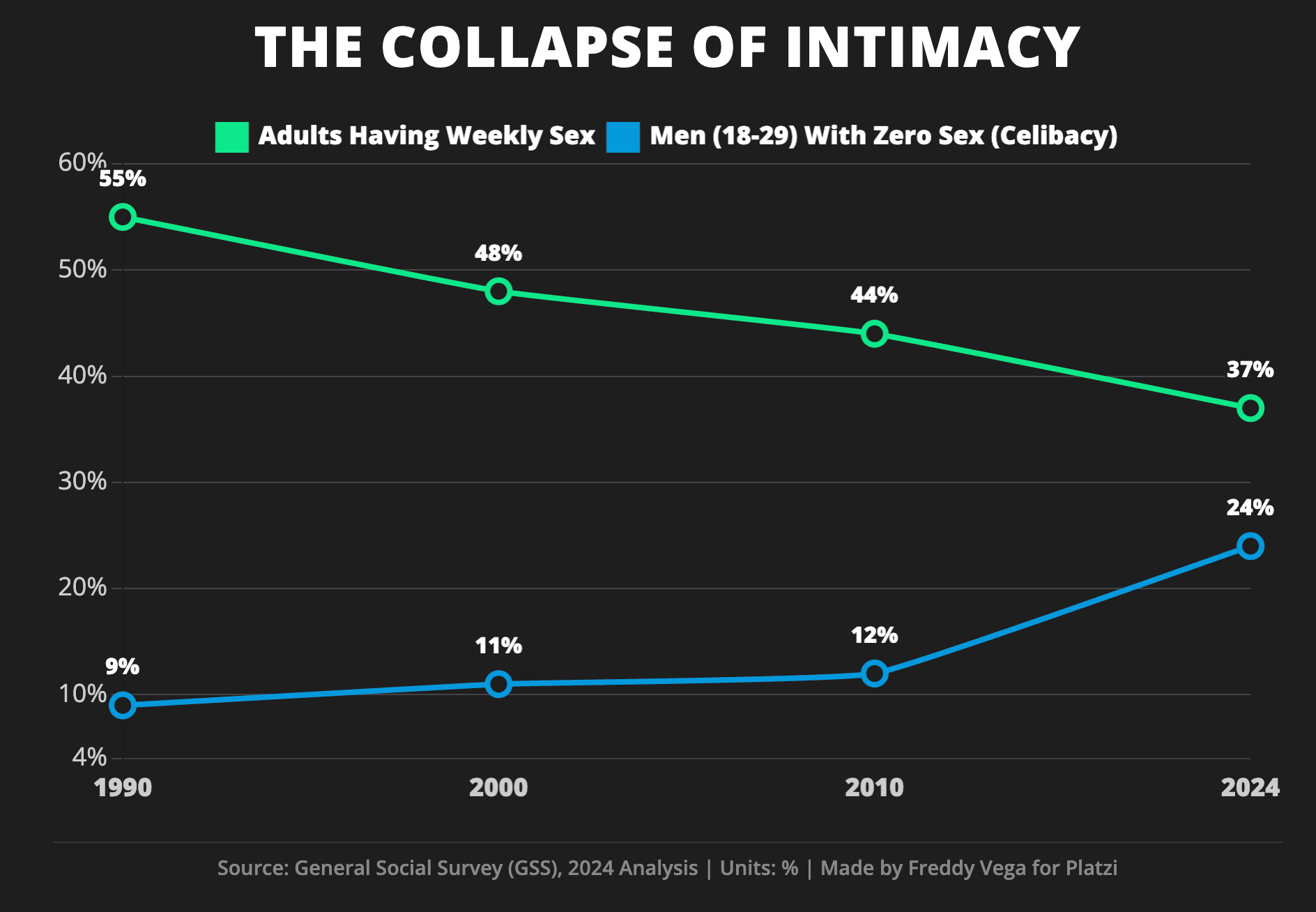
In the past three decades we have seen a massive drop in adults engaging in any form of weekly naked interaction. In 1990, about 9% of men aged 18–29 had zero intimacy. By 2024, the number tripled. A quarter of men under 30 have never experienced sex.
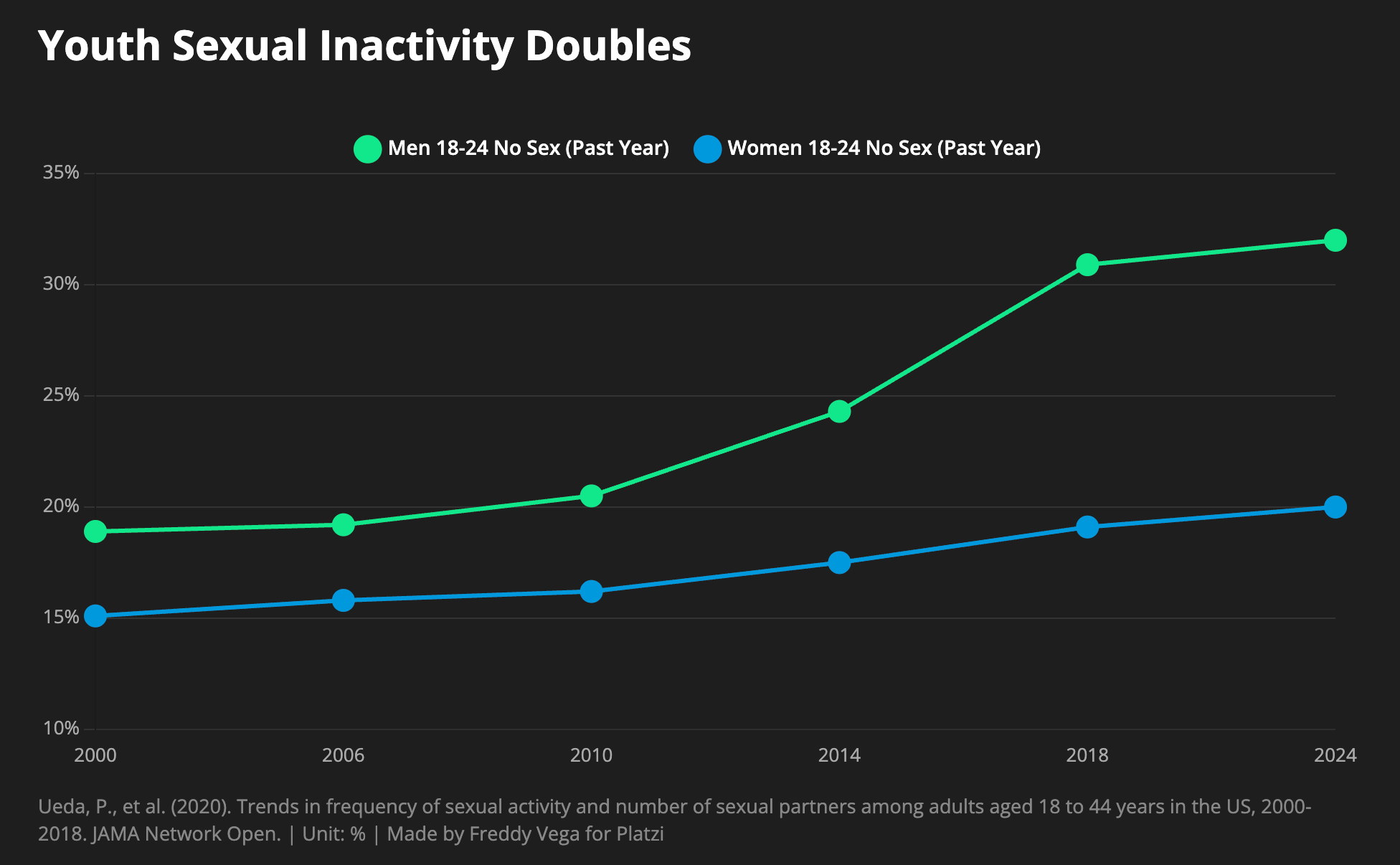
This gap is gendered. While sexual inactivity has risen for young women too (up to 20%), it has skyrocketed for young men (over 32%).
Everyone thinks they know why this is happening. But the reality is a complex mix of economics, biology, and algorithms affecting us all, from the US to Japan to Colombia. The only outliers seem to be Greece (cultural health) and Brazil.
So, why did we stop touching each other?
The first variable is economic. You can’t bring a date home if you don’t have a home.
In 2010, one-third of young adults lived with their parents. Today, it’s more than half. As the rate of young people living at home skyrockets, the rate of marriage and cohabitation collapses in an almost perfect inverse correlation.
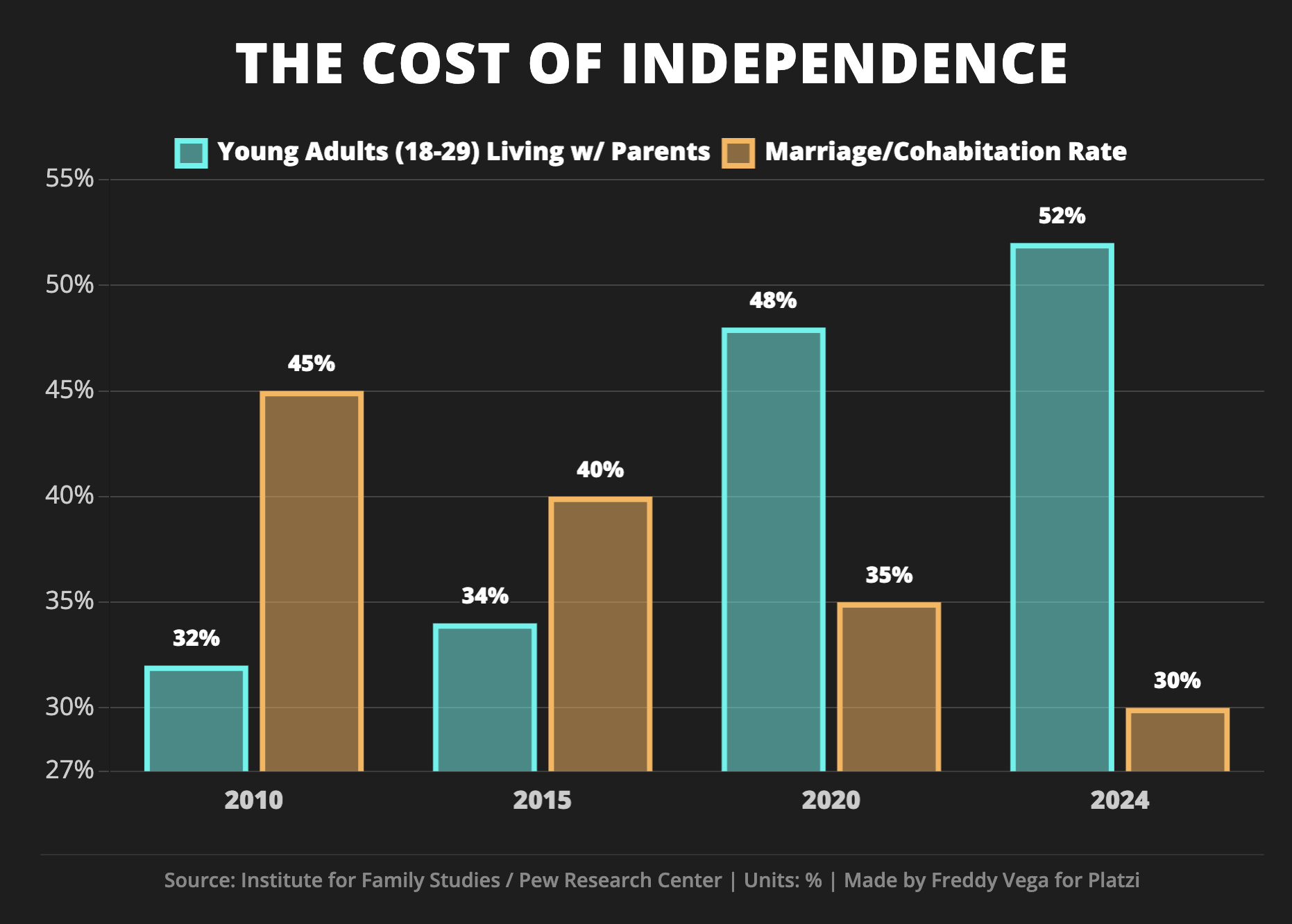
We are delaying one of the most important graduations of adulthood: independence.
The Anhedonia Epidemic
Beyond the economy, there is a mental health crisis. Anxiety, depression and plain loneliness have been growing non-stop, accelerated by mobile social networks, short-form video formats and the pandemic.
In my research for this piece, I found a more specific, terrifying concept: Anhedonia.
Anhedonia is the inability to feel pleasure. It is a core symptom of severe depression. In 1990, around 180 million people globally suffered from it. Today, that number is nearing 350 million.
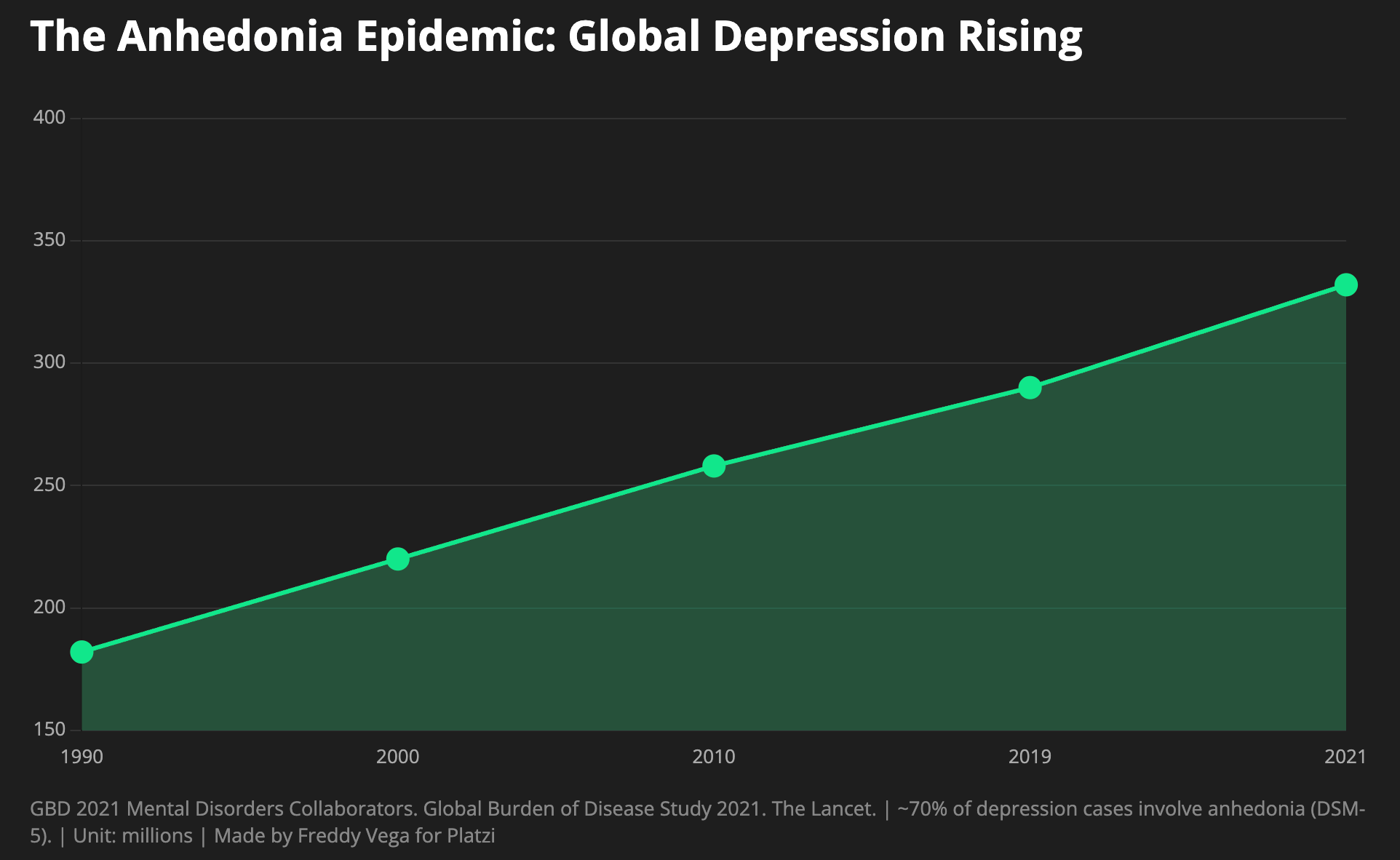
Getting naked with another human being is one of the biggest social risks you can take, which becomes unimaginable for an anxious, risk-averse, reclusive society.
The Algorithm’s Inequality
Dating apps have created an inequality curve that rivals the global economy. Their ranking algorithms, optimized for user retention, make the top 20% of men capture 80% of the attention and likes. The bottom 50% of men are fighting for 4.3% of the attention.
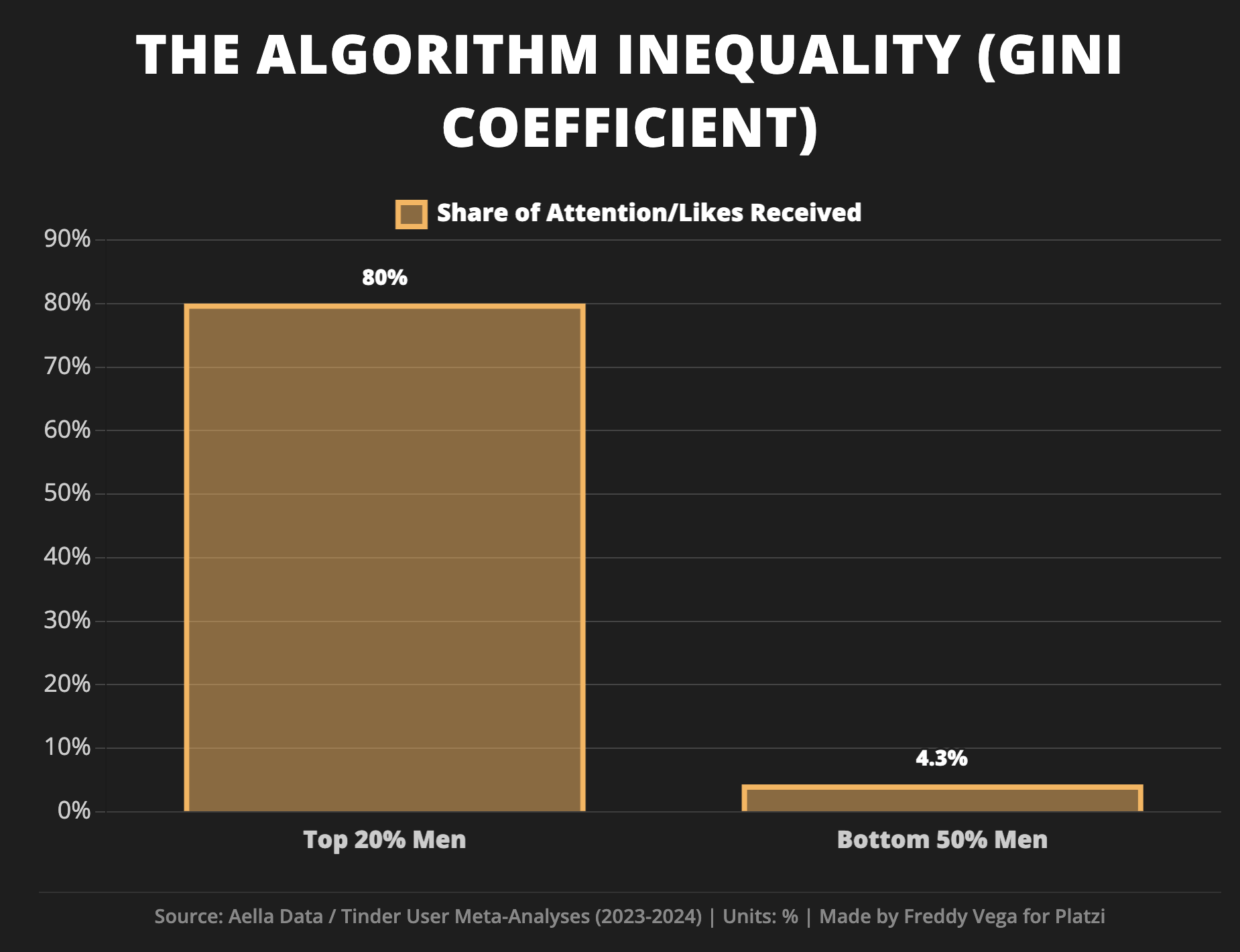
Women in apps end up overexposed to a group of men in that top 20% who live in a world of abundance, warping their empathy. While men in the other 80% feel invisible.
If you’re not in those apps, you’re scrolling through Instagram, applying the “Paris” filter to our lives, erasing the stretch marks and flaws of reality. We’re trading the eroticism of physical presence for a curated digital hallucination.
The Death of the Bedtime Routine
Even married couples aren’t safe. The frequency of intimacy in marriage has dropped from 70% weekly in 2000 to 58% today.
People are having fewer kids, so it isn’t parenthood: It’s the phone.
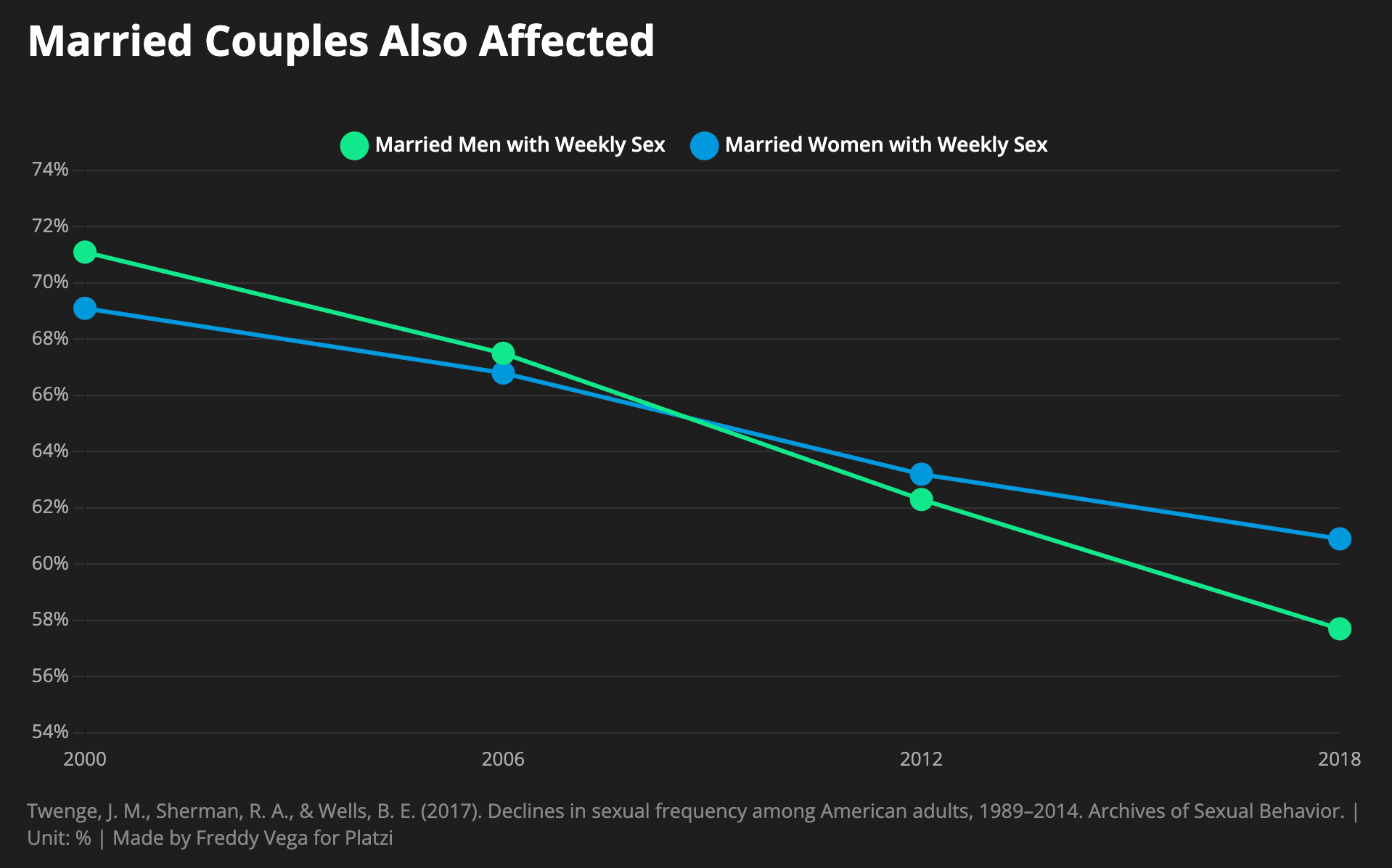
The natural window for intimacy used to be right before sleep. You’d brush your teeth, get into bed, read a book, and eventually touch your partner. Now, we spend three hours scrolling before sleep and grab the phone the second we wake up.
We’re physically in the same bed, while our minds live in a digital feed of emotional validation coming from likes and DMs from strangers, whose smell we’ll never know.
The “Only” Economy
Here is the most damning chart I found. I initially thought I was wrong because the global condom market is growing. But that growth is coming from expanding markets in Africa and Asia.
When you look at the “consolidated markets” in developed economies, condom sales are collapsing:
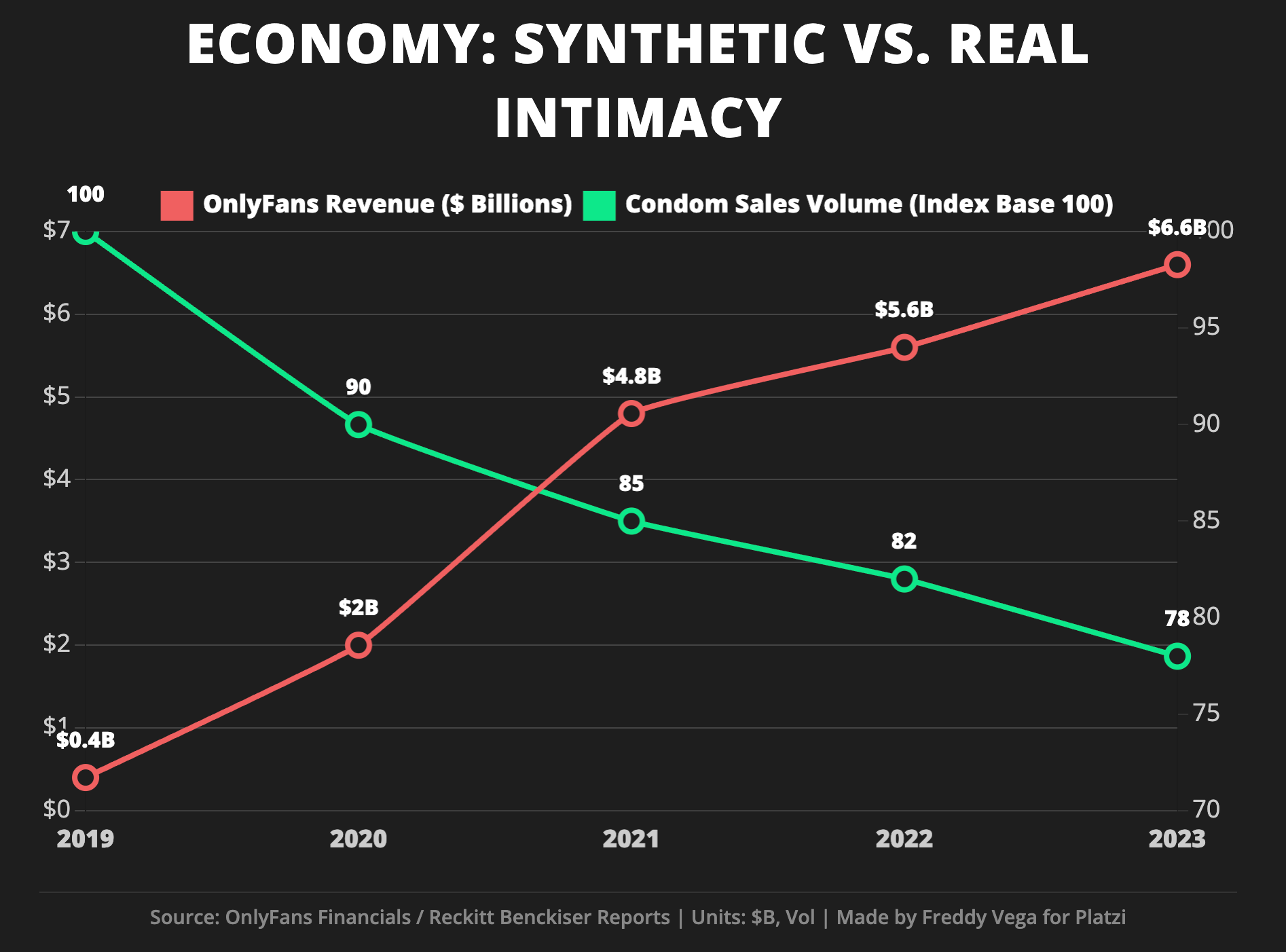
In red, you see the revenue growth of digital intimacy platforms (like OnlyFans). In green, the sales volume of condoms. We are swapping physical, social relationships for digital, parasocial ones.
The Biological Factor
Our biology is also under attack. Sperm counts have dropped by roughly 52% in the last 50 years.
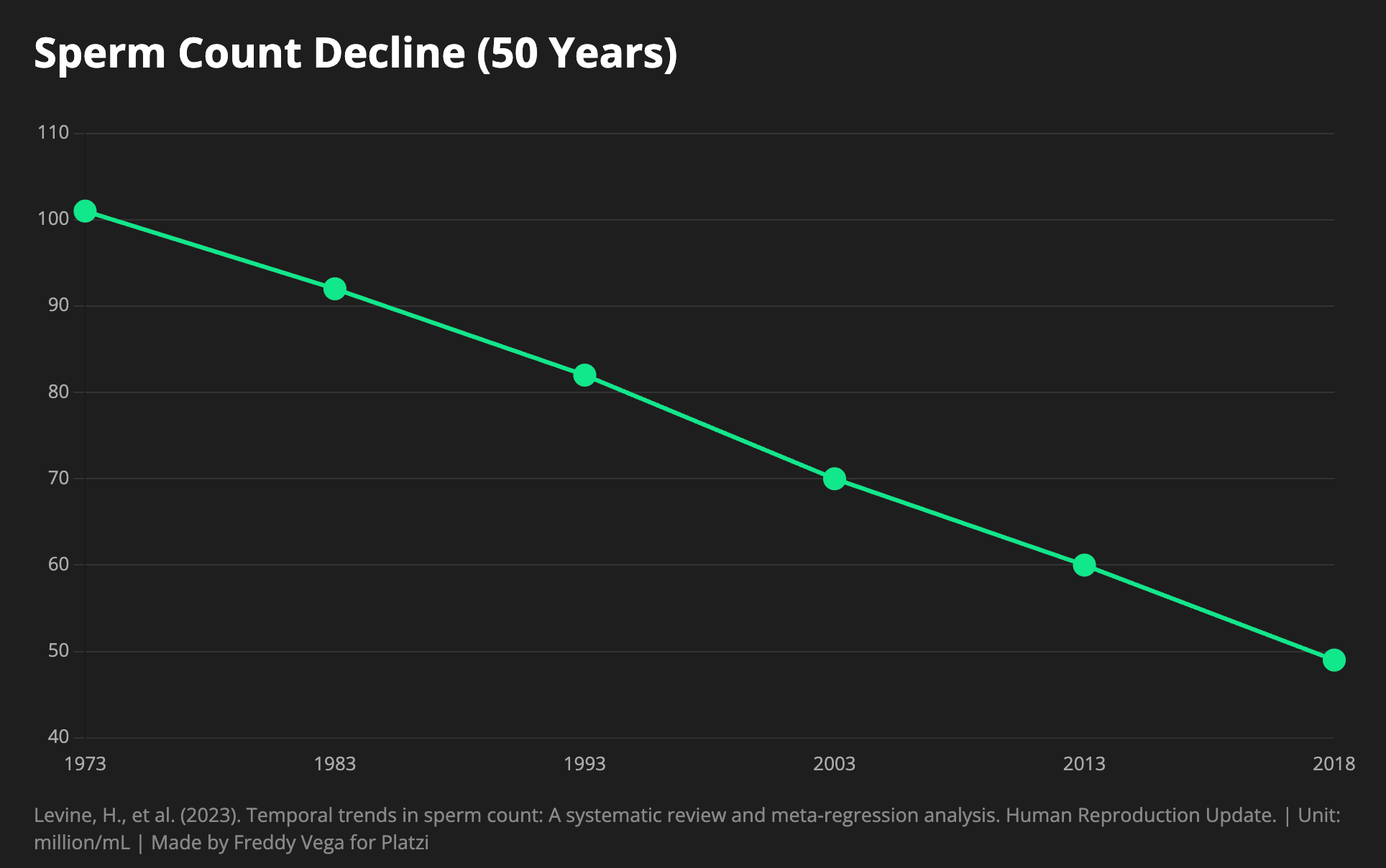
There are microplastics in 100% of tested testicular tissue (mostly from tire friction and synthetic clothing). We are also seeing the side effects of the GLP-1 revolution. Drugs like Ozempic are miraculous for obesity, but early data suggests a slight correlation with erectile dysfunction and lowered testosterone in a small percentage of users.
And, of course, we’re drinking less alcohol.
It Gets Better for Women (and Millennials)
If you are a Millennial reading this and feeling sad: just wait.
The data shows a fascinating twist. While Gen Z is having the least sex in history, Millennials are starting to figure it out. Post-pandemic, the intimacy numbers for Millennials are creeping up.
Why? Millennials are now in their early 40s, and after 40, everything gets better.
The drama fades. You stop playing games. You state what you want.
The other big reason for the volume decline in sexual activity is actually a positive one: Gender Equity.
In the past, the high frequency of sex in “Boomer” marriages came from women having no choice. They couldn’t say no. Financial and social dependence forced compliance.
Today, women have control. They have money, freedom, and futuristic toys that are freakishly good. Women need men less than men need women.
That’s the final reason. As the volume of sex encounters falls, female satisfaction is rising. It’s a trade of quantity for quality, specially for women.
The demand for real connection hasn’t dropped though. We all, in every gender and orientation, want to meet that person who feels special. We just have to be brave enough to put down the phone, ask for what we want, enjoy rejection and, from time to time, find the spark.
Que buena lectura Freddy, yo lo resumiría en la frase que mencionas "disfrutar el rechazo". Saludos de un paraguayo viviendo en Brasil, leyendo un post en inglés de un colombiano viviendo en EEUU.
Es muy interesante lo que expones, Freddy. Creo que anhedonia es muy visible, además, me hace pensar en como es dificil nombrar lo que se siente en una sociedad que escribe menos, o bueno que escribe menos sin asistencia de IA.
Creemos que la IA es importante e inevitable pero que también la creatividad humana no va a sobrevivir por defecto, necesitamos seguir creando arte y otros seres humanos. Un saludo, Freddy. Gracias por hacer blogging sin asistencia de IA para escribir tu contenido.