

All my life, I’ve had to explain that I don’t drink. In some social spaces, that idea was unbearable. “Come on, just one”, “one drink hasn’t harmed anyone”, etc. I became an expert at hiding it, asking discreetly for mocktails or sloooowly sipping a glass of sparkling water with a mint leaf.
In the past few years, my need to hide has disappeared, as not drinking has become the default. With it, however, the parties and social events have also faded away, replaced by vapers, screens and boredom.
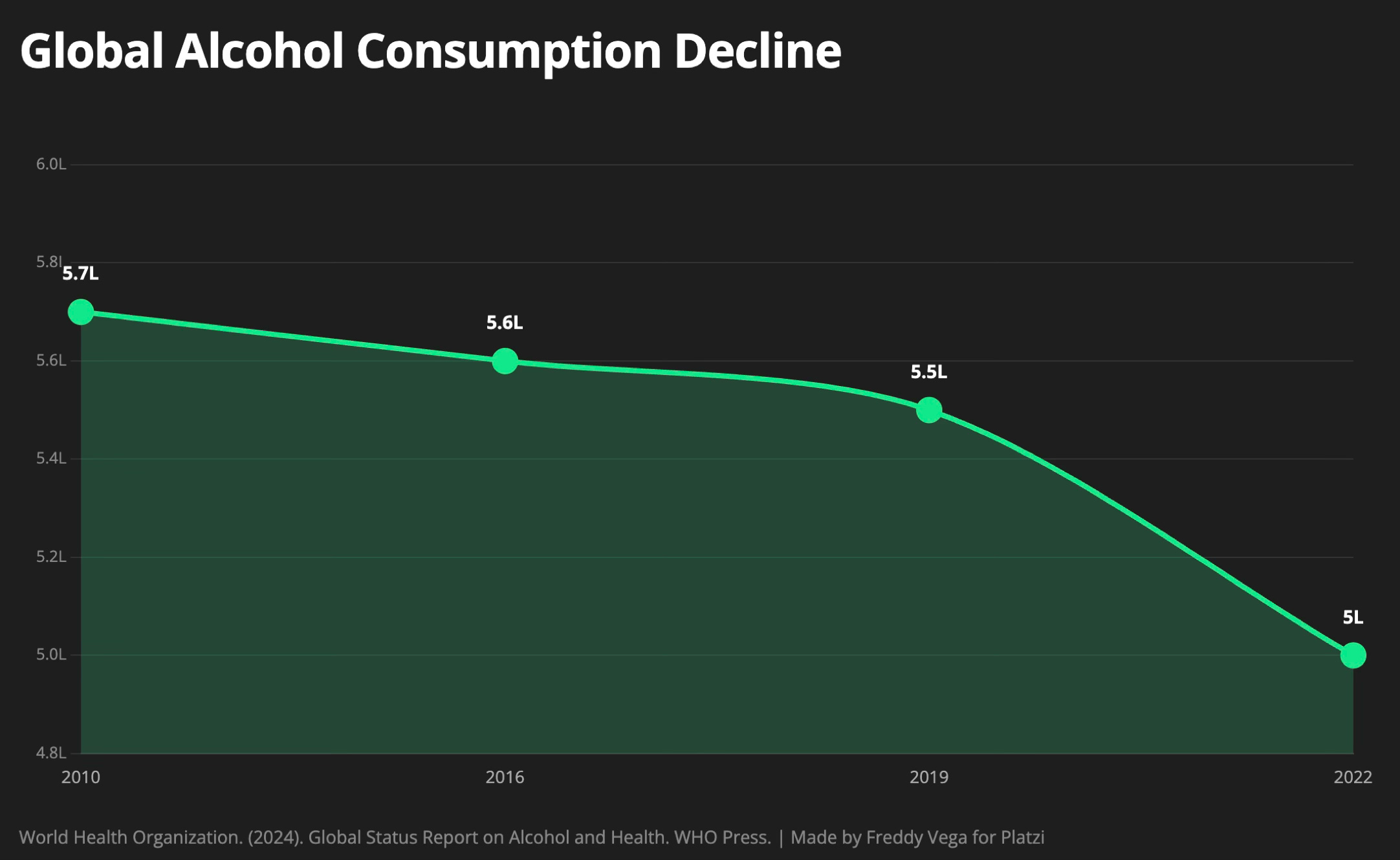
Alcohol consumption is declining globally. Less than half of last year’s high school graduates had ever tried alcohol at any point during their entire high school experience. That number used to be 83% about fifteen years ago.
And this is bringing some curious side effects.
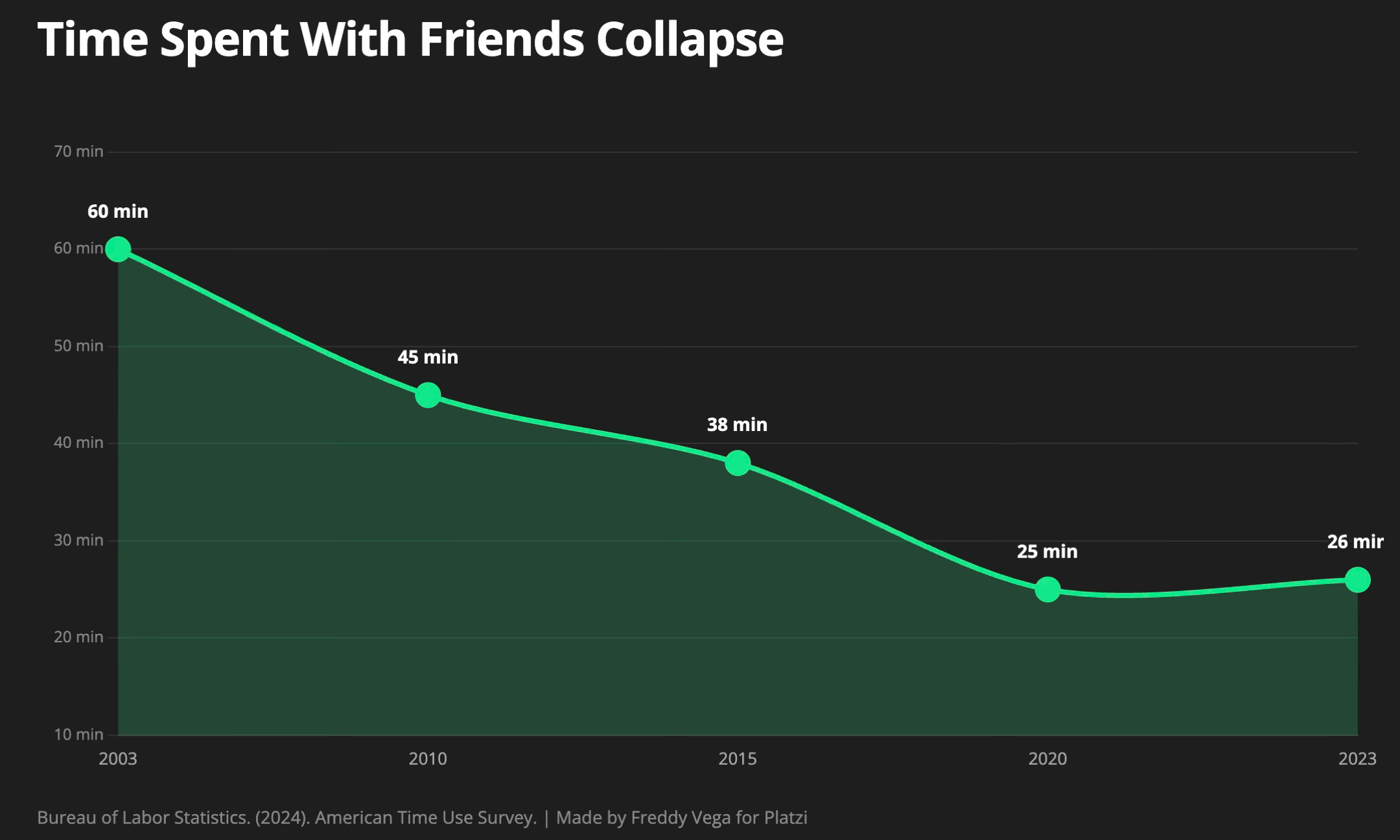
There’s been a collapse in time spent with friends. In 2003, people spent about 60 minutes a day with friends. Today? 26 minutes.
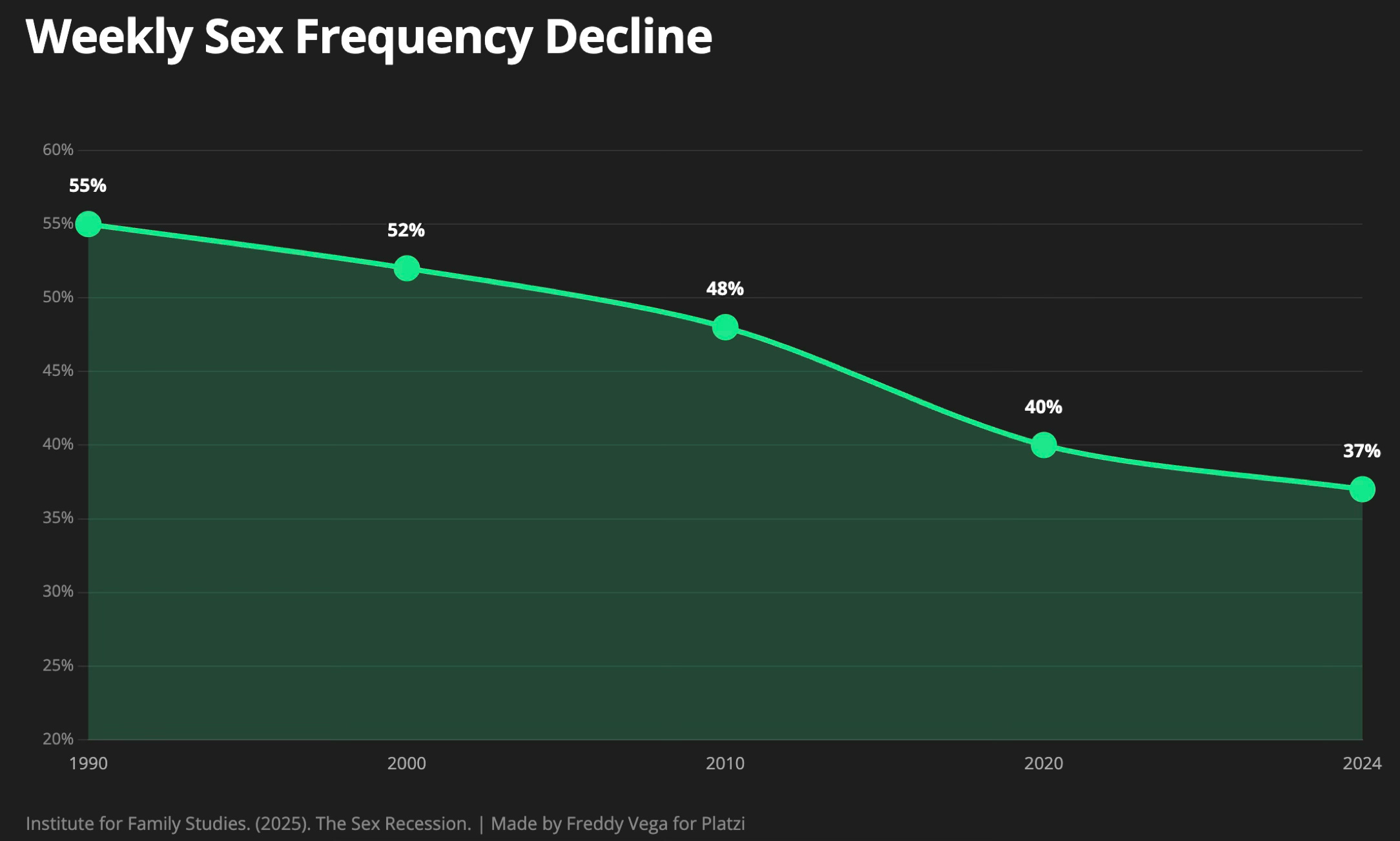
There’s also a decline in weekly sexual frequency among couples.
Alcohol is poison. The WHO published a series of meta-studies that found, without exception, that there is no safe amount of alcohol consumption. “A little wine doesn’t hurt”? It hurts. The occasional beer? Still hurts. All alcohol consumption causes practically irreversible damage to your health.
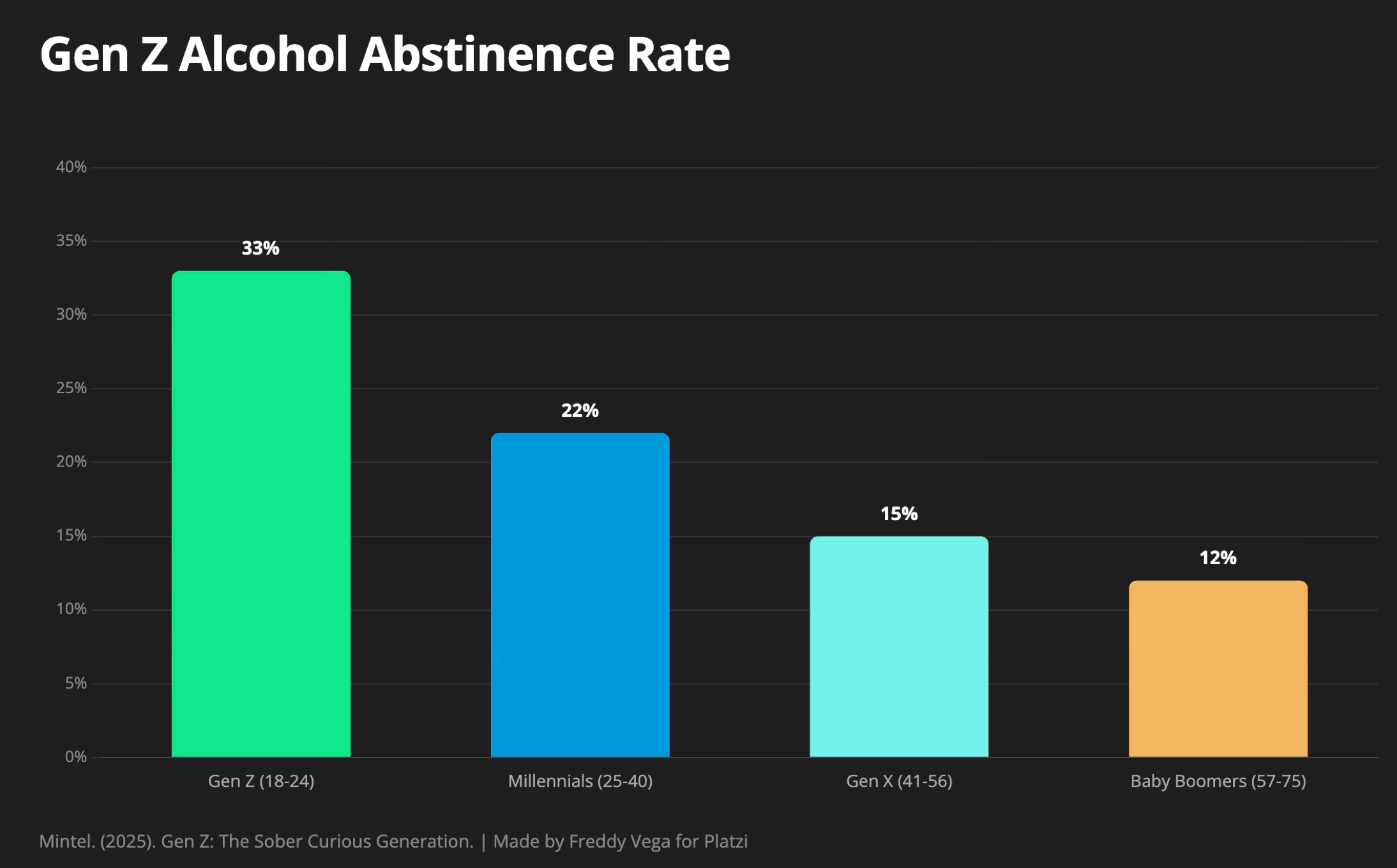
A third of people aged 18-24 don’t consume alcohol at all, compared to 22% of millennials, 15% of Gen X, and 12% of boomers. Boomers drink at brutal rates.
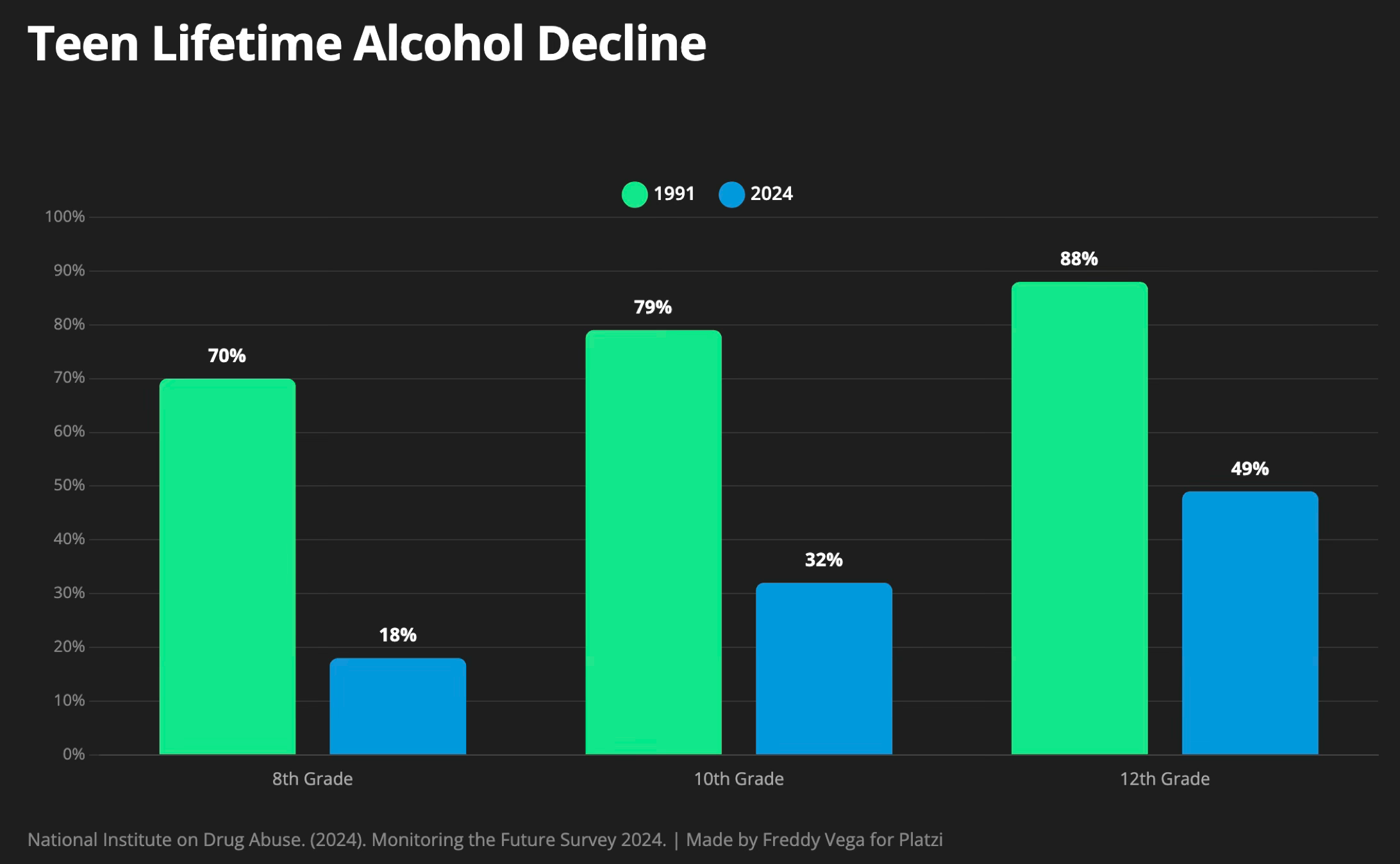
When you break down teen alcohol consumption by grade level: in the 90s, 70% of eighth graders had tried alcohol. By 2024? Just 18%. For tenth graders, it went from 79% to 32%. For seniors, from 88% to 49%.
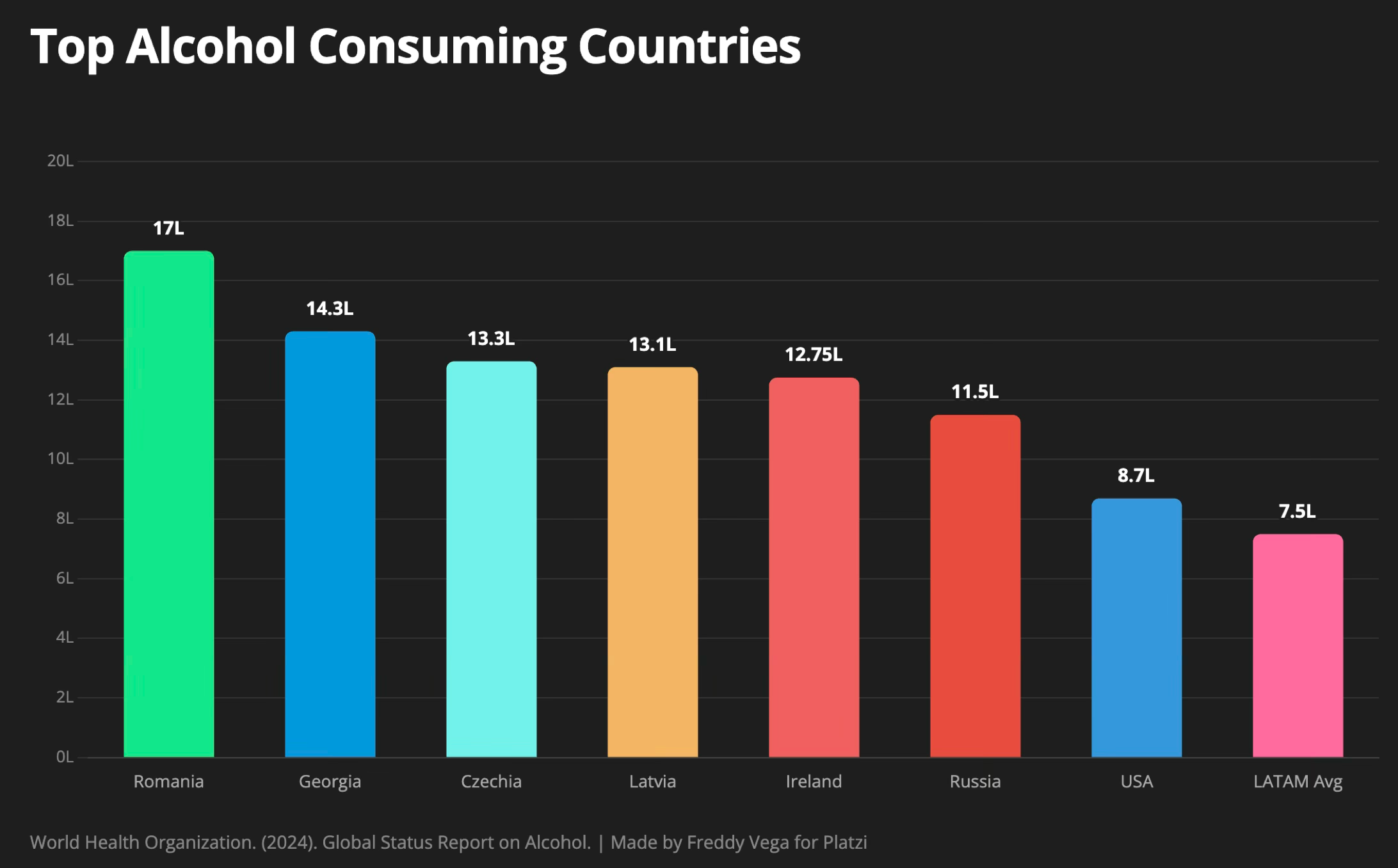
And before you say “but here in Latin America we drink a ton”, not really. Latin America is actually well below the top consuming countries. The heaviest drinkers are Romania, Georgia (more than double Latin America’s average), Czech Republic, Latvia, Ireland, Russia. The US drinks more than Latin America.
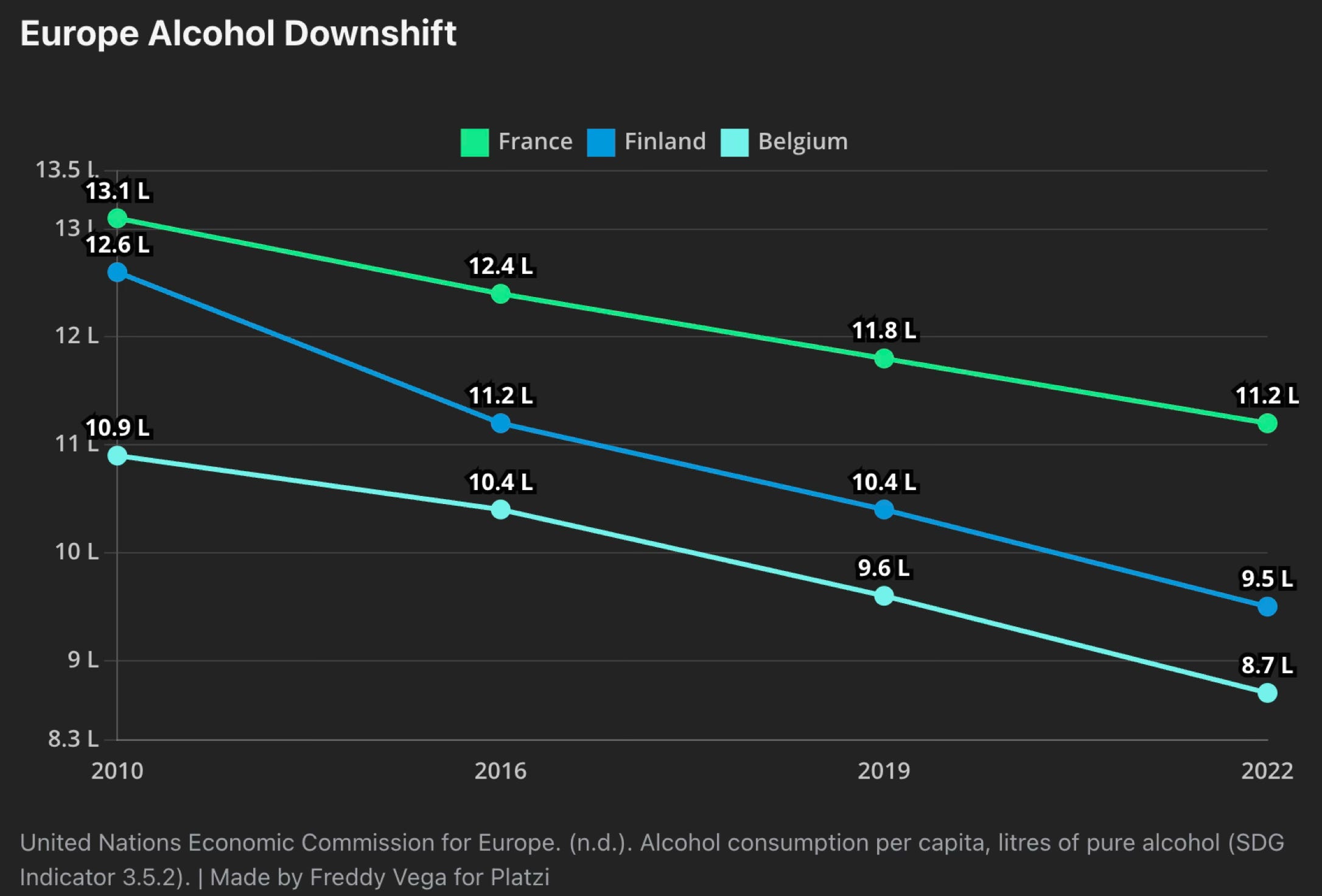
Even in Europe, historic wine producers and cultural drinkers, alcohol is in free fall. From 2010 to 2022, consumption in France, Finland, and Belgium has dropped significantly.
Weed Replaced It
I really didn’t want my research to give me this result. But it did.
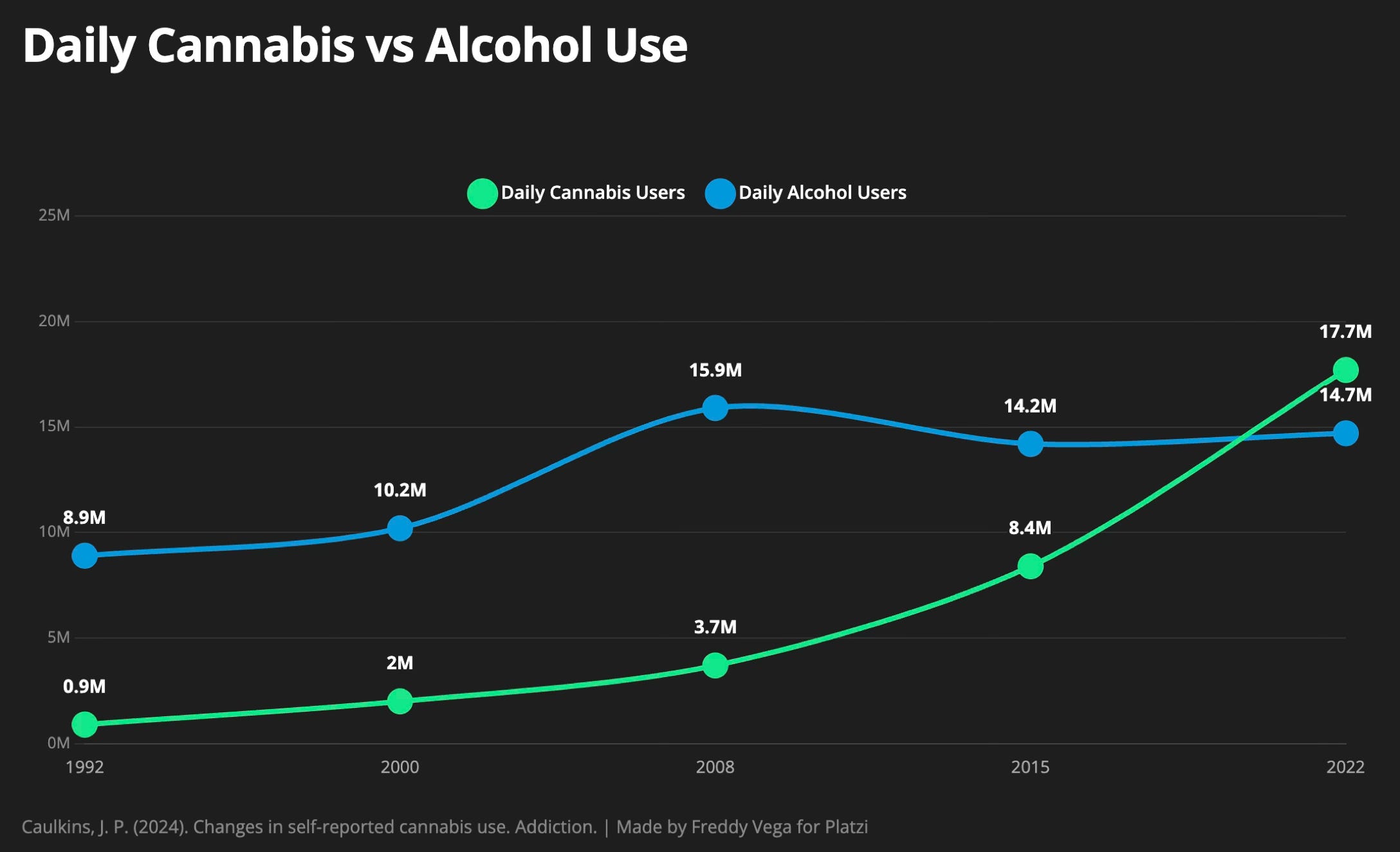
There’s now a crossover point between daily alcohol users and daily cannabis users. Since roughly 2008, driven by legalization, cannabis consumption started rising, and for the first time in history, there are more daily cannabis users than daily alcohol users in the United States.
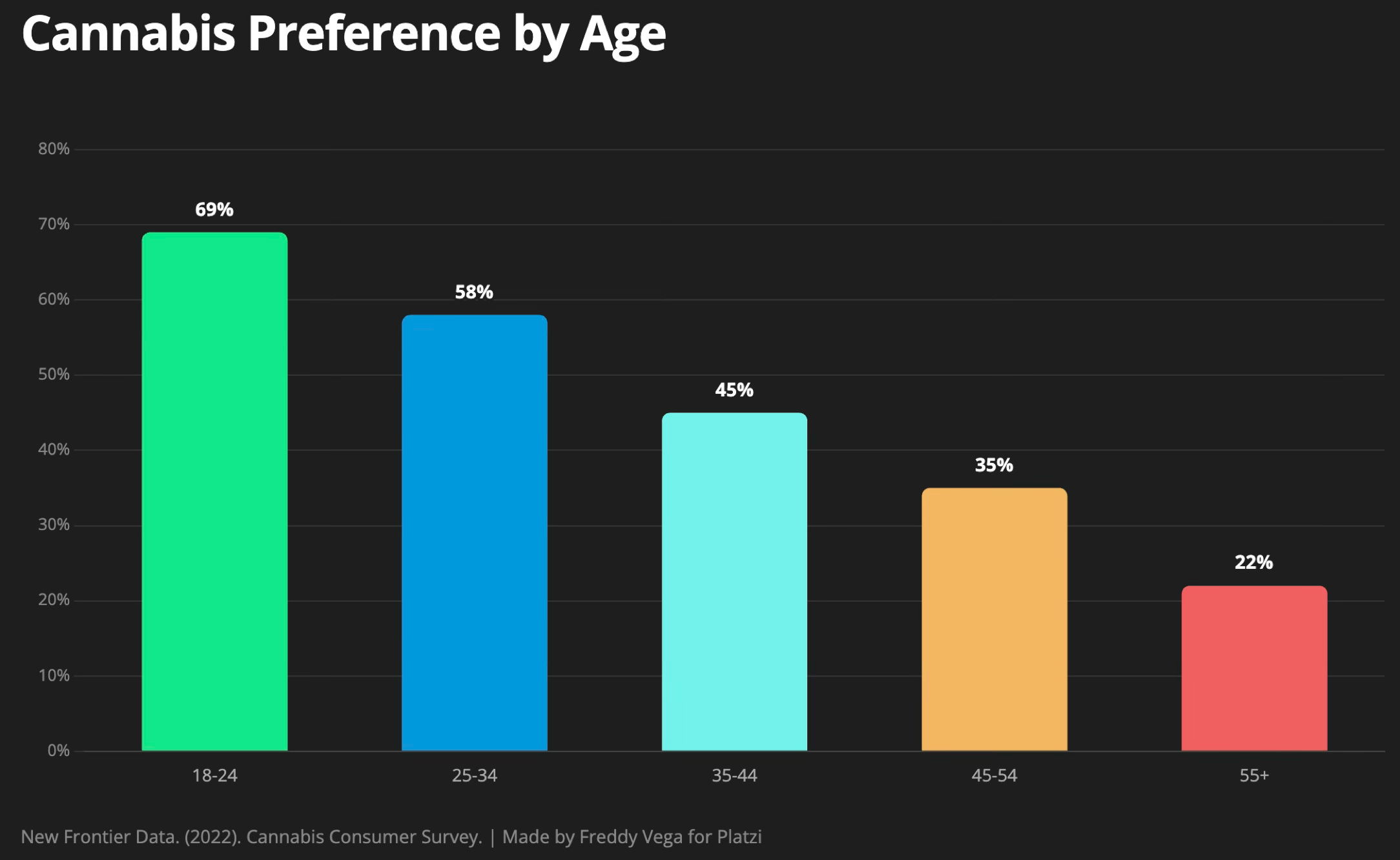
This also tracks generationally. The heaviest cannabis consumers are Gen Z (18-24), followed by 25-34, then 35-44, and so on. The generational decline in cannabis use mirrors, inversely, the generational decline in alcohol.
Over the past several years, legalization campaigns promoted many studies suggesting cannabis is practically medicine. That’s not true.
Multiple studies have shown serious issues. A 2023 study on cannabis and cardiovascular outcomes found it increases heart attack risk by 6x, doubles cardiovascular death risk, and even edibles reduce blood vessel function by 50%, similar to tobacco. Cannabis weakens the heart, inflames the lungs and organs, and causes chronic inflammation.
There’s also a significant link to psychosis. This is so common it’s embedded in culture: we all know people who’ve had panic attacks just from consuming it.
And there’s a 2022 study on long-term cognitive effects showing that when people consume cannabis frequently before age 20, particularly between 13-18, it causes a 5.5-point IQ decline that manifests in adulthood and doesn’t recover even after you stop using.
Cannabis makes young people permanently dumber. That’s why they’re called “stoners.” The stereotype exists for a reason.
Rituals We Lost
We seem to be trading alcohol for sadness, depression, and endless scrolling. Sure, it’s a damaging substance, but alcohol had another function.
Alcohol was the excuse for the ritual of connecting.
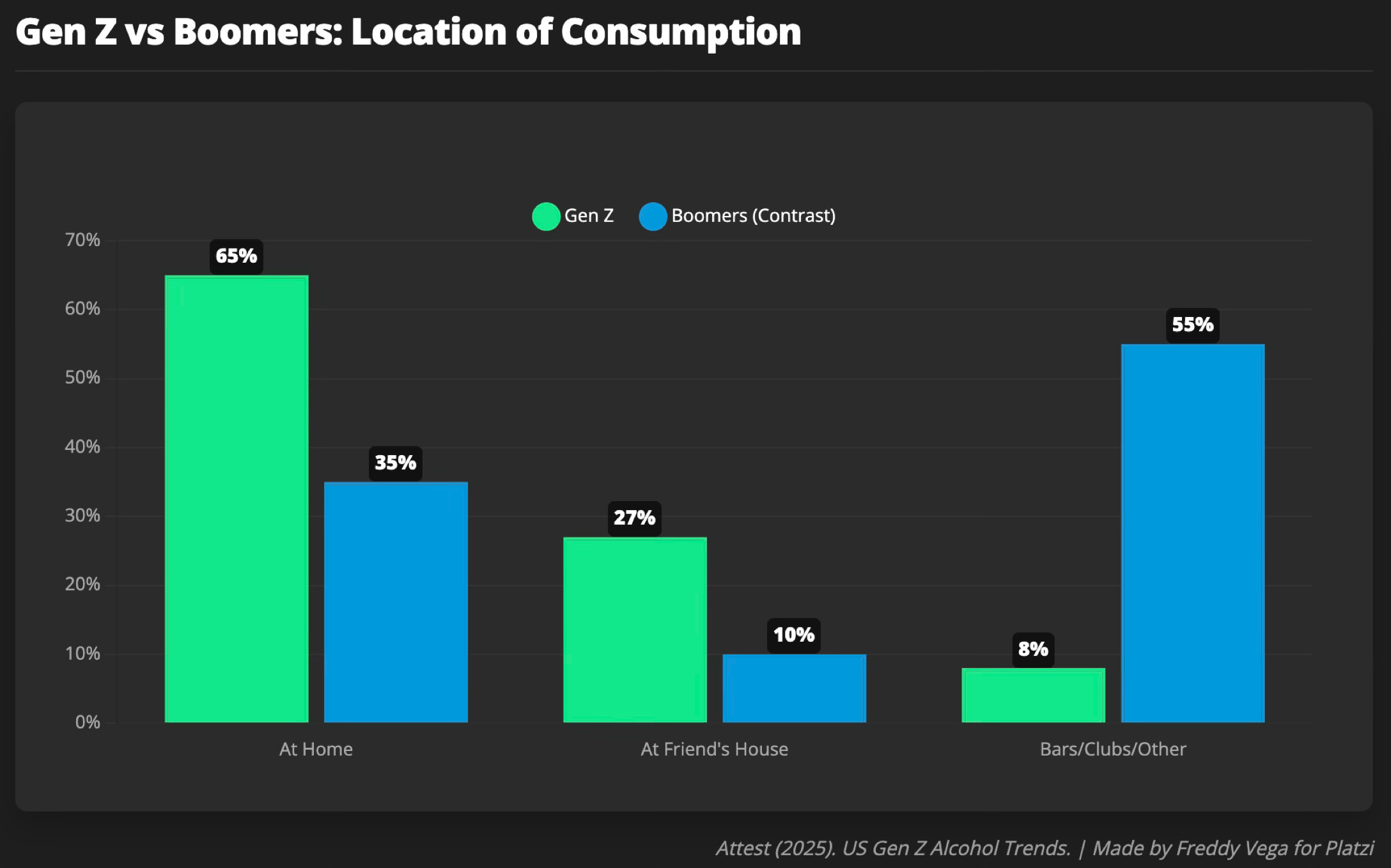
Look at where people consume. When you compare Gen Z (under 24) with Boomers, Gen Z predominantly drinks at home (like alcoholics) while Boomers predominantly drank in clubs, bars, social venues. They left the house.
The “third place” is disappearing. A third place is somewhere that’s neither your home nor your office. And that third place is dying.
Yes, I know the comments will mention capitalism, everything being expensive, whatever. But this has always been true. People with even fewer resources still did it. This is a generational shift where people justify their sedentarism and isolation with tremendous energy.
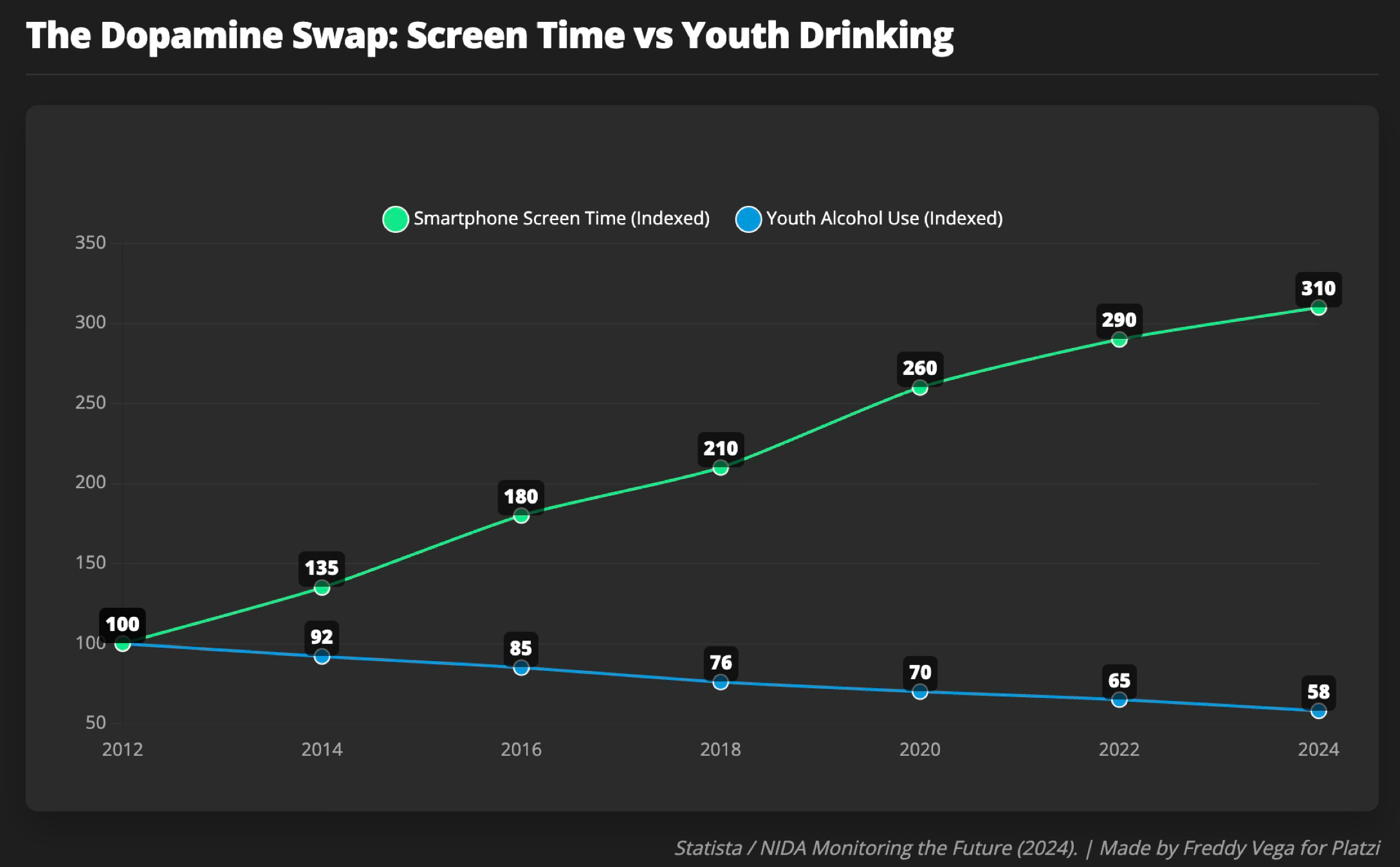
On top of everything, screens are consuming us. When you index 2012 as 100% and track forward, you see youth alcohol use declining while screen time grows at an almost exponential rate.
Screens demand nothing from us except continued scrolling and attention. So we don’t connect with people. You can be glued to a screen and never speak to anyone. With alcohol, not so much.
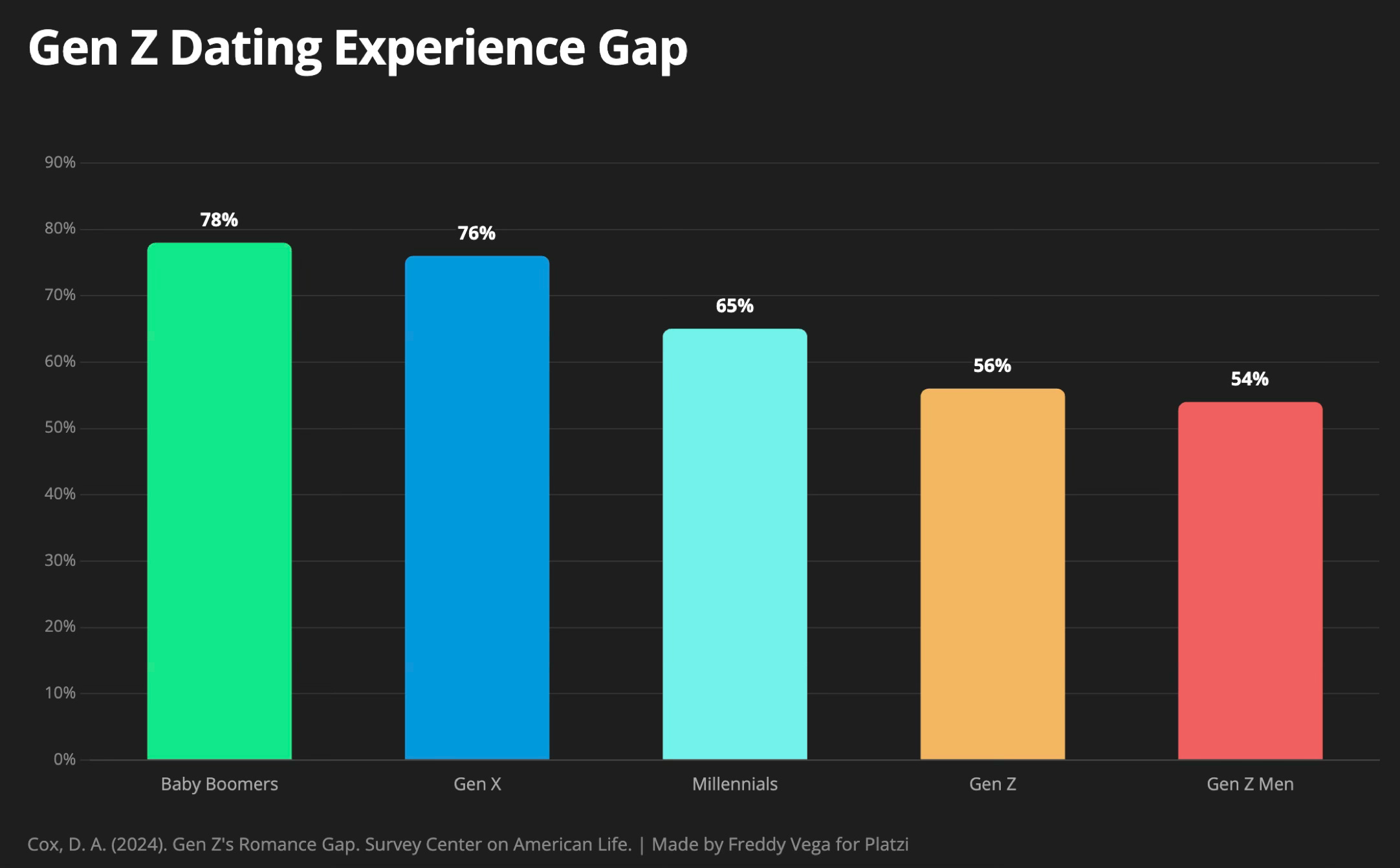
Look at this wild chart: Half of Gen Z have never had a boyfriend or girlfriend before reaching adulthood. In contrast, 78% of Boomers, 76% of Gen X and 65% of Millennials reached this human milestone.
Massive experience gap in human connection.
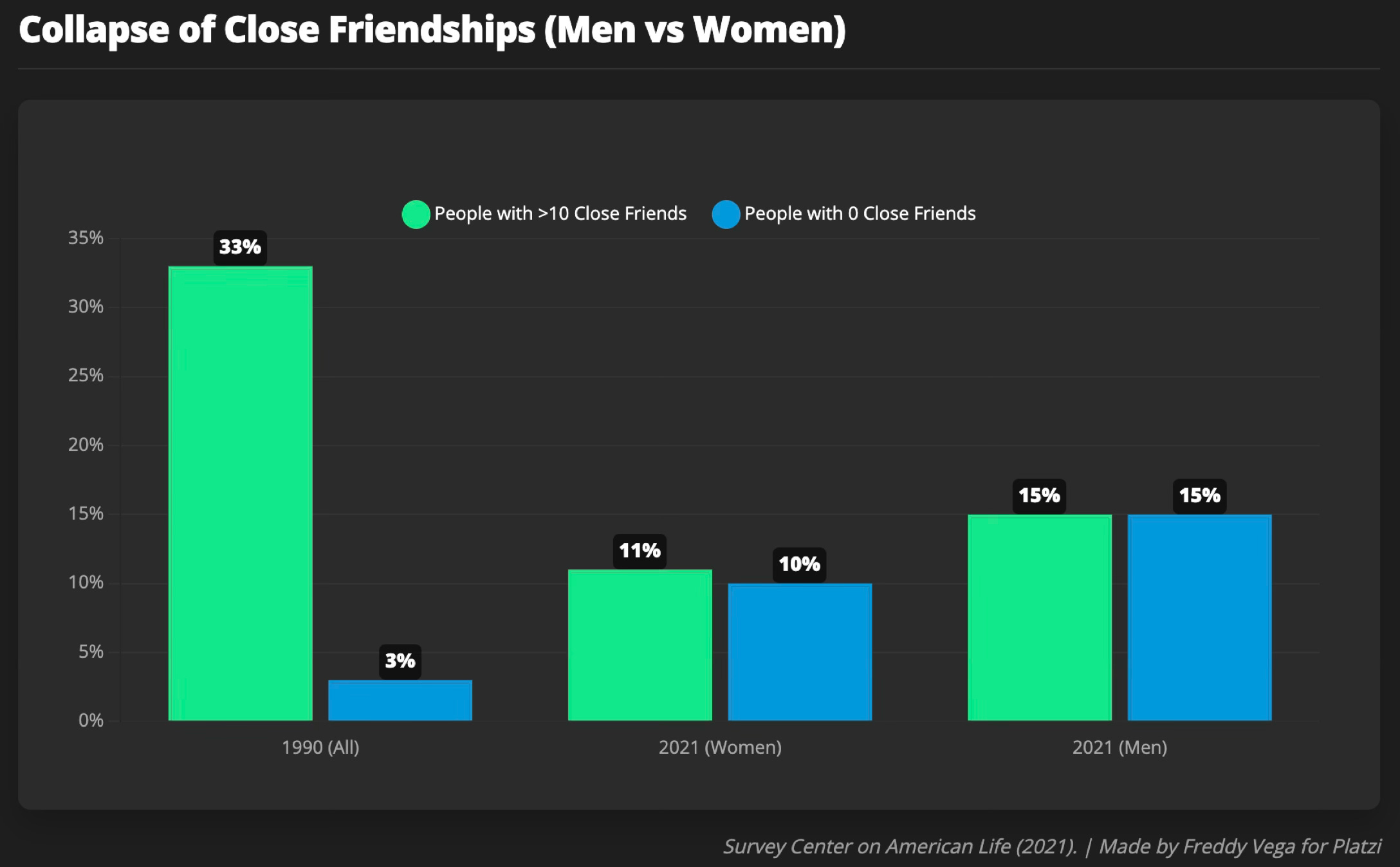
And it’s not just romantic connection, close friendships collapsed too. In the 90s, 33% of people had more than 10 friends. Only 3% had zero friends. Today, 10% of women and 15% of men live in absolute solitude.
Our Non-Alcoholic Future
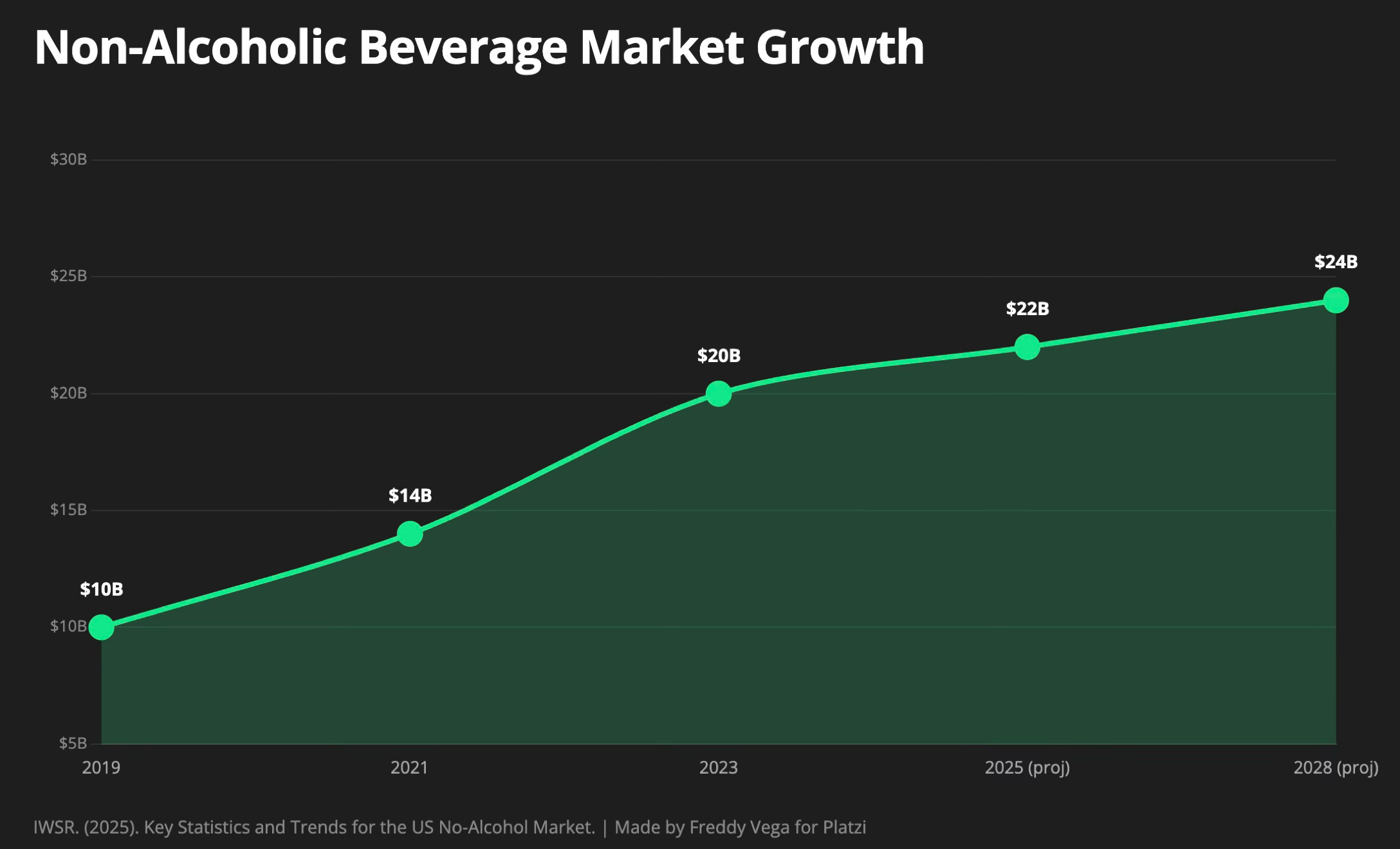
The non-alcoholic beverage market is growing like never before. People want to drink beer and wine, but not get drunk. There’s still a status component in drinking, and a desire to be in the places where alcohol allowed connection.
Christian, my cofounder, once told me: “You’re not paying for the drink. You pay for access to these people, this bar, this vibe.” He was right. There’s nothing wrong with that.
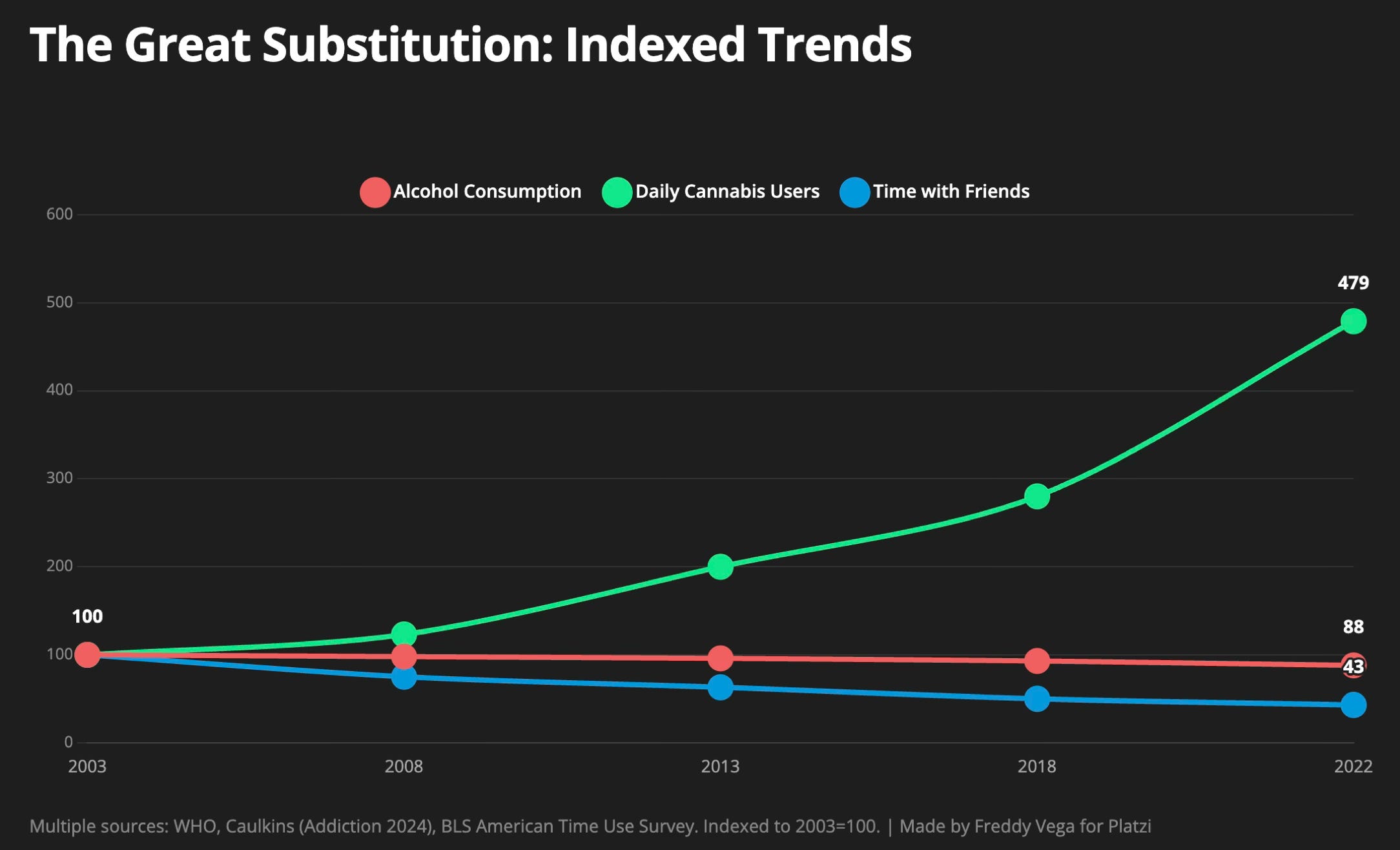
As alcohol consumption falls, time with friends falls. Use of other dangerous substances like cannabis rises. And our addiction to screens explodes.
I’m not telling you to drink alcohol.
But alcohol was probably how you incentivized yourself to take more social risks and connect with strangers who might become important in your life. Humans are social animals. We need other humans, without question.
So if you’re not going to drink, at least make the effort. Tolerate the discomfort. Go meet someone new before this year ends.
Your article reminded me of an insightful reading from Steven Johnson: "Where Good Ideas Come From". Johnson explains how pubs in Britain once thrived as spaces for exchanging ideas, but as drinking intensified, the quality of intellectual interaction diminished. Coffeehouses then emerged as ideal public places for thoughtful dialogue and creative exchange.
This resonates with my own preference for sharing a cup of coffee with friends, colleagues, and students. Coffee shops—whether Juan Valdez in Latin America or Starbucks globally—seem to be reclaiming that role as modern hubs for social connection and idea-sharing.
In a complex world, with a constant pressure on our own biases (social media) could be a root cause of derailing the consumption on weed and facing a loneliness society. The solution is also on our hands, less display interaction with apps that enhance our biases, and more face to face interaction with other minds that challenge our current paradigms (sharing a good Colombian coffee, of course).
When I was 15-16yo the pressure to try alcohol while i was hanging out with my friends it was too much that today I hate family and close friends events just bc of that. But yes we need to socialize more for sure.