

For the last century, the “state monopoly on violence” was maintained by a simple economic moat: it cost millions of dollars to train a soldier, equip a battalion, and buy a tank. If you wanted to challenge a government, you needed a state-level budget.
The economics of warfare have inverted, and after Ukraine, Latin America is the next to suffer from it.
The “Democratization” of Air Superiority
In Mexico, the cartels today operate a mid-sized logistical airline.
According to Homeland Security, there are roughly 328 drone flights per day crossing the US border. That is 10,000 flights a month. They aren’t just moving drugs; they are moving heavy weaponry and surveillance equipment.
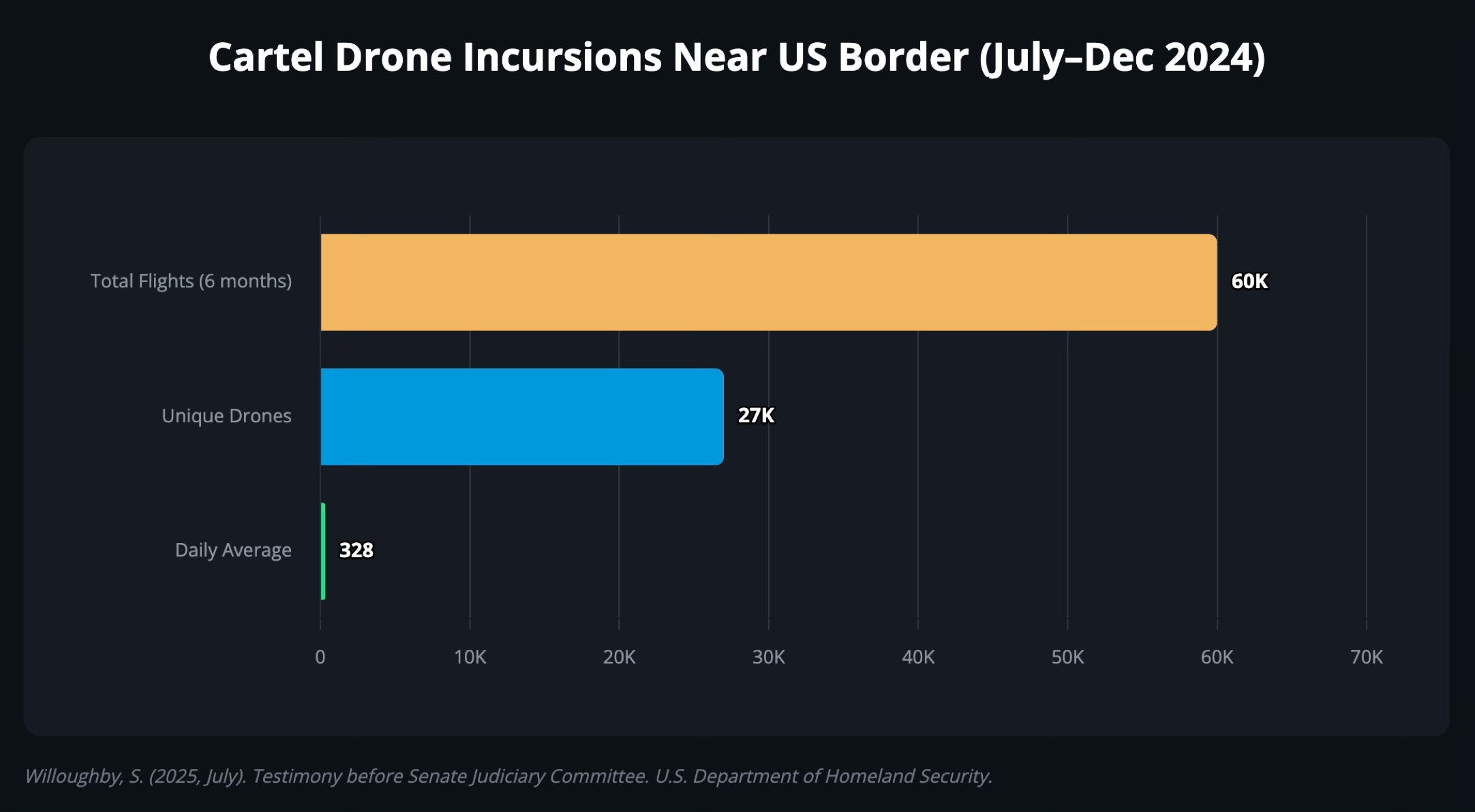
The growth is exponential. We are seeing a shift from crude experiments to standardized, industrial-scale drone operations.
In the 1990s, a military-grade drone cost $300,000. Today, a drone with military capacity—capable of carrying an explosive payload—costs $500.
Compare that to the legacy cost of defense:
Infantry Soldier Training: ~$50,000
Javelin Missile: ~$178,000
M1 Abrams Tank: ~$10 Million
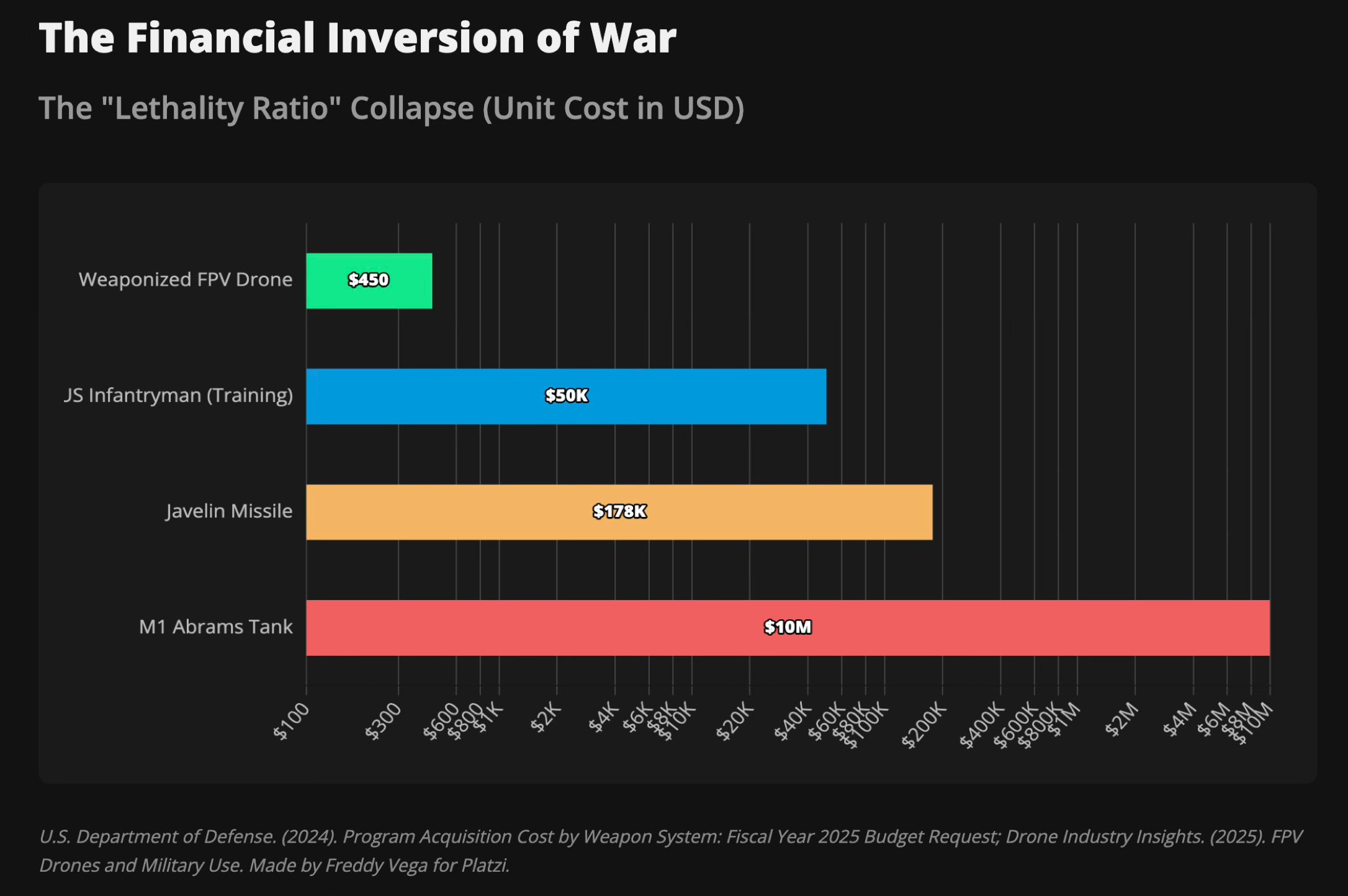
This is a logarithmic military disaster. You can now take out a $10 million piece of hardware with a $500 toy bought on the internet. This destroys the asymmetry that kept governments in charge. When a criminal group can field an air force for the price of a used car, the state loses its monopoly on power.
The Ukraine Precedent
If you want to see the future of Latin American security, look at the timeline of the war in Ukraine.
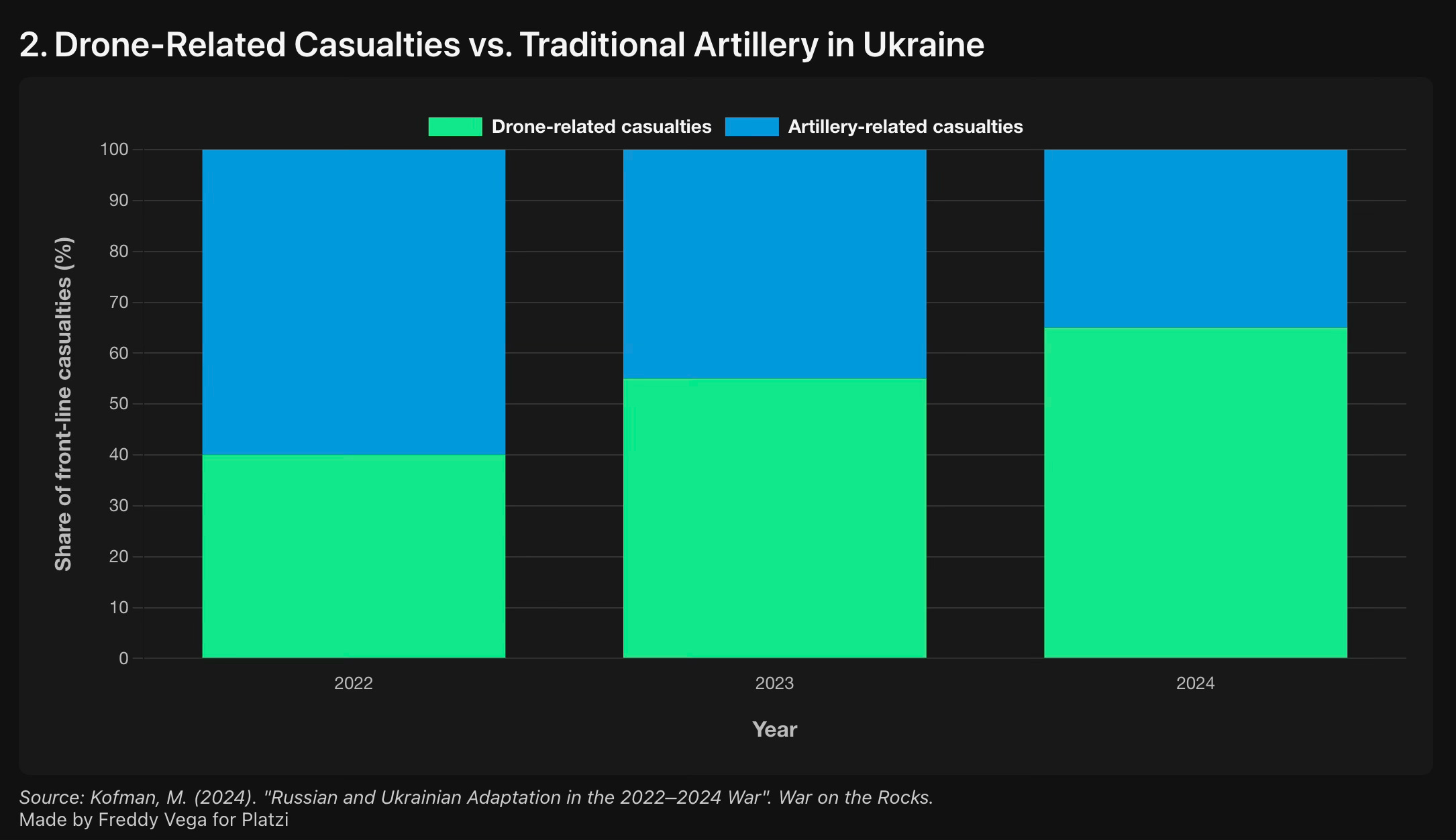
In 2022, most casualties came from artillery. But look at how the lines cross. Slowly, then suddenly, drones became the primary cause of death and injury.
Criminal groups in Latin America are sending men to Ukraine to learn. The “pilots” flying drones in Ecuador or Colombia are still unexperienced, but they will improve.
The Supply Chain Trap
Latin America has no way to defend itself against this future because we can’t make our own defense systems.
We are entering an era of “Digital Clientelism”, depending entirely on foreign powers for our digital and physical security.
Ukraine produces 2.2 million drones a year.
Russia produces 1.5 million.
China produces 4 million.
Latam? Close to nothing.
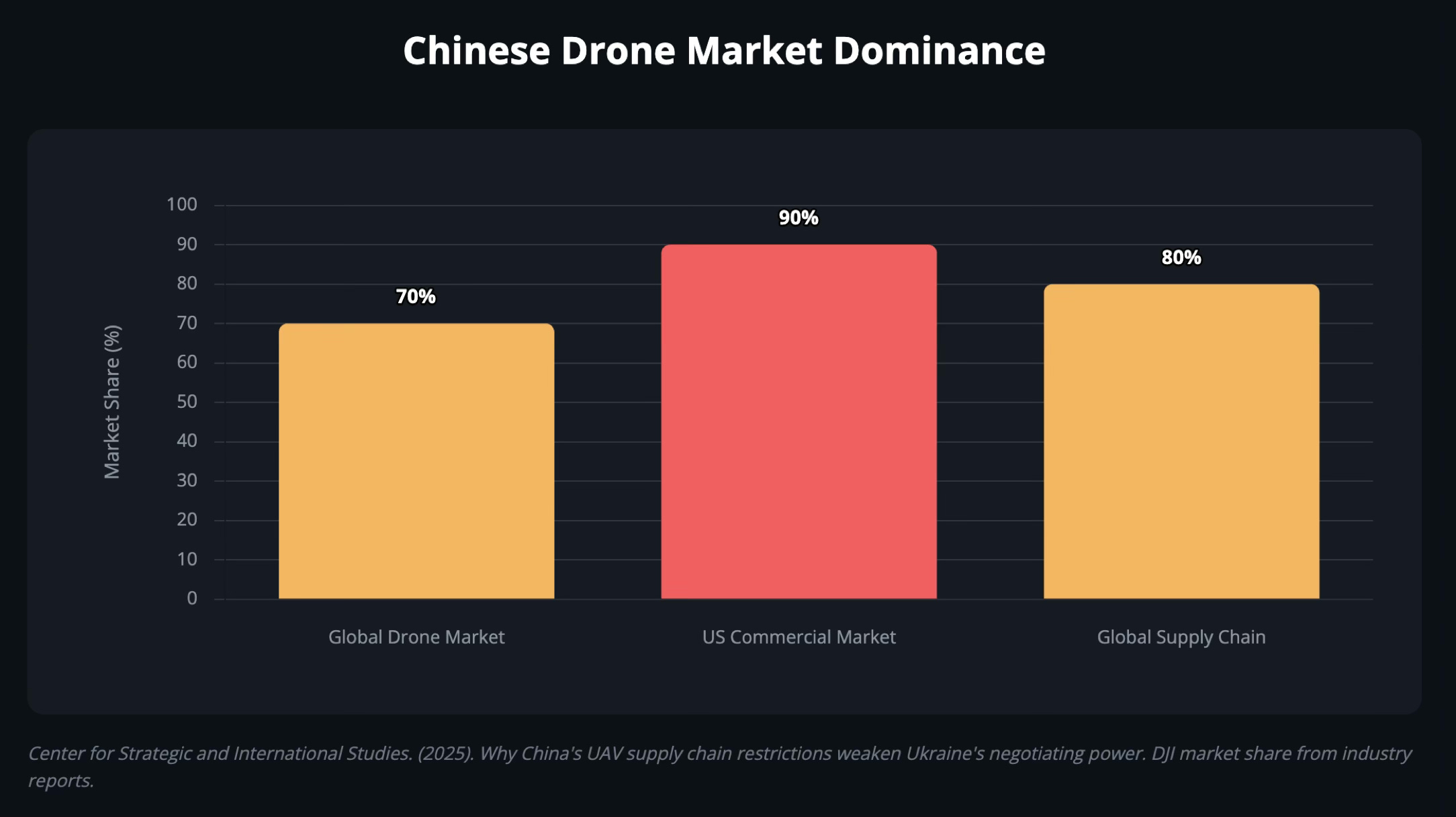
China controls 70% of the global drone market and roughly 90% of the commercial market in the US. They own the supply chain: the rotors, the brushless motors, the batteries.
Speaking of batteries: Latin America sits on 60% of the world’s Lithium.
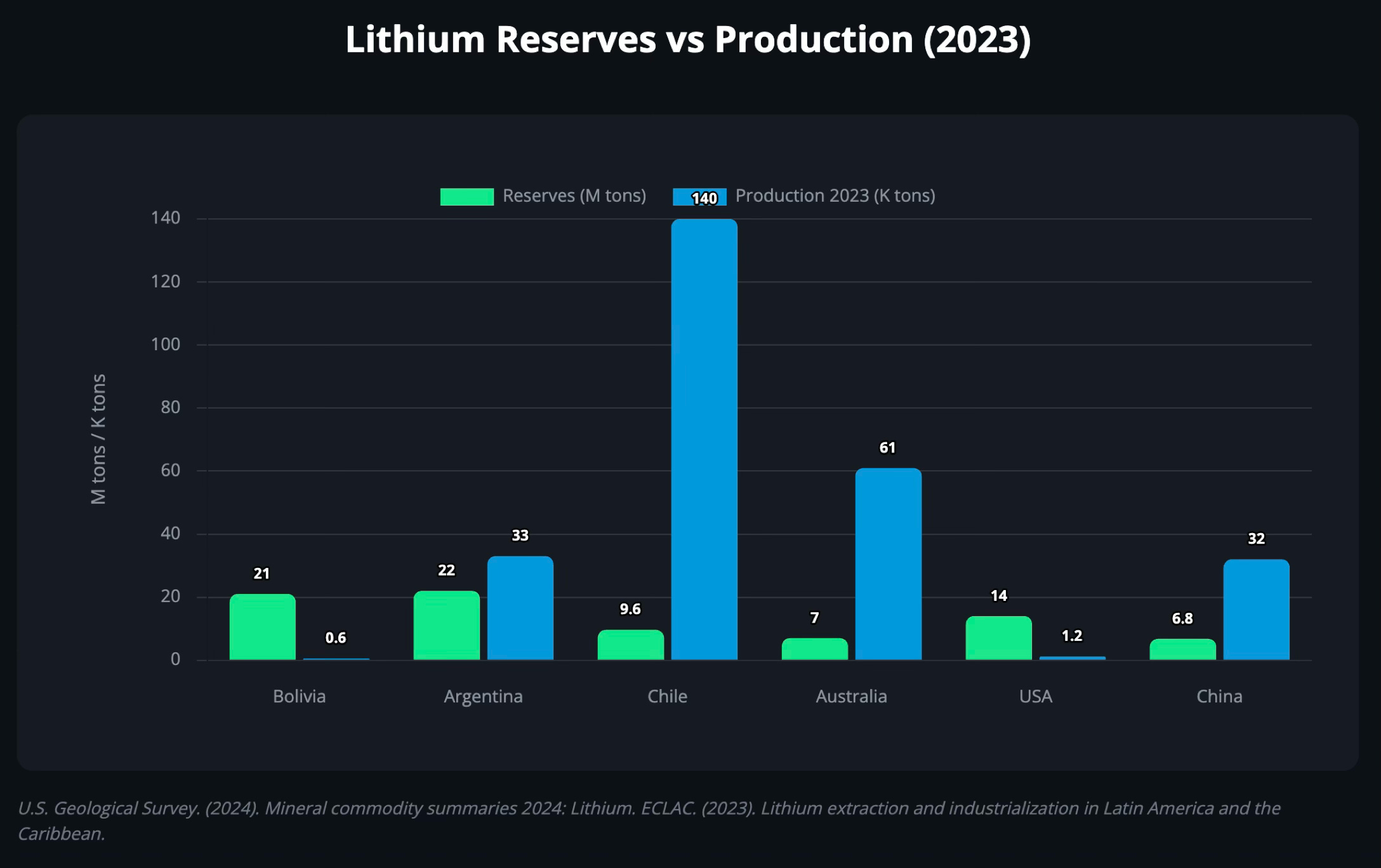
We have the fuel for the robot revolution, but we lack the industrial capacity to process it. We are digging dirt while China sells us back the batteries at a premium to power the drones that undermine our own security.
The Privatization of Sovereignty
This leads to a metric I call the Privatization of Sovereignty. It’s the ratio of private security guards to public police officers.
In a high-trust state like Poland, there are 0.4 private guards for every police officer. In the US, it’s about 1:1.
In Guatemala? 7 private guards for every cop. In Brazil? 4.5.
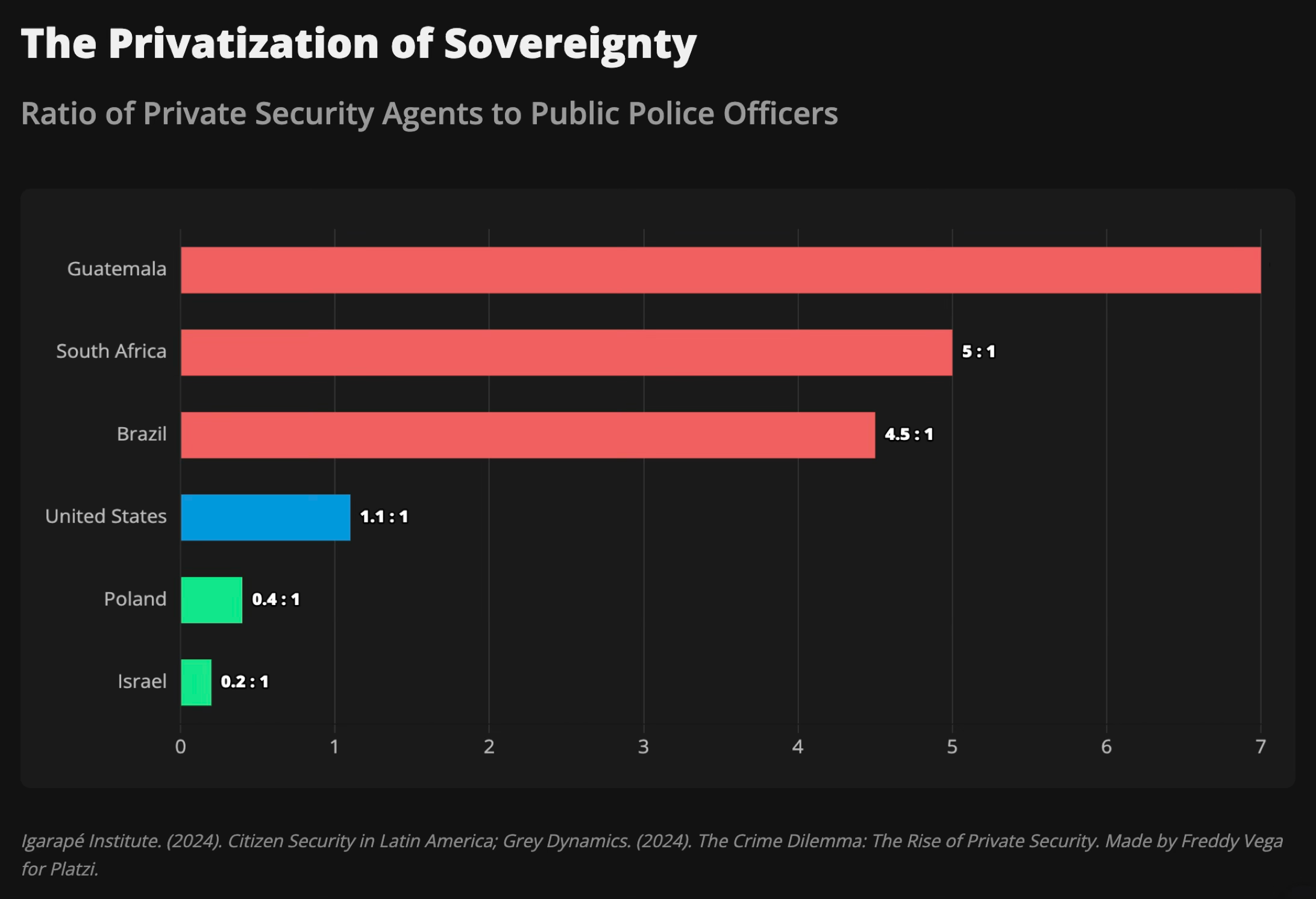
The wealthy and the middle class are effectively seceding from the state’s protection. We treat this as normal in Latin America: 24/7 lobby security, bomb-sniffing dogs at the mall, electric fences. But it’s not normal. It is a sign that the state has failed to enforce the law.
The “Green Zone” Future
As drone warfare makes it impossible for under-funded states to control their entire territory, we will see a hard bifurcation of our geography.
We are moving toward a world of Green Zones and Red Zones.
Green Zones: Hyper-secured, surveilled bubbles where the elite and productive economy live (think certain neighborhoods in Santiago, Mexico City, or Bogotá).
Red Zones: Large swathes of territory surrendered to non-state actors because projecting power there is too expensive.
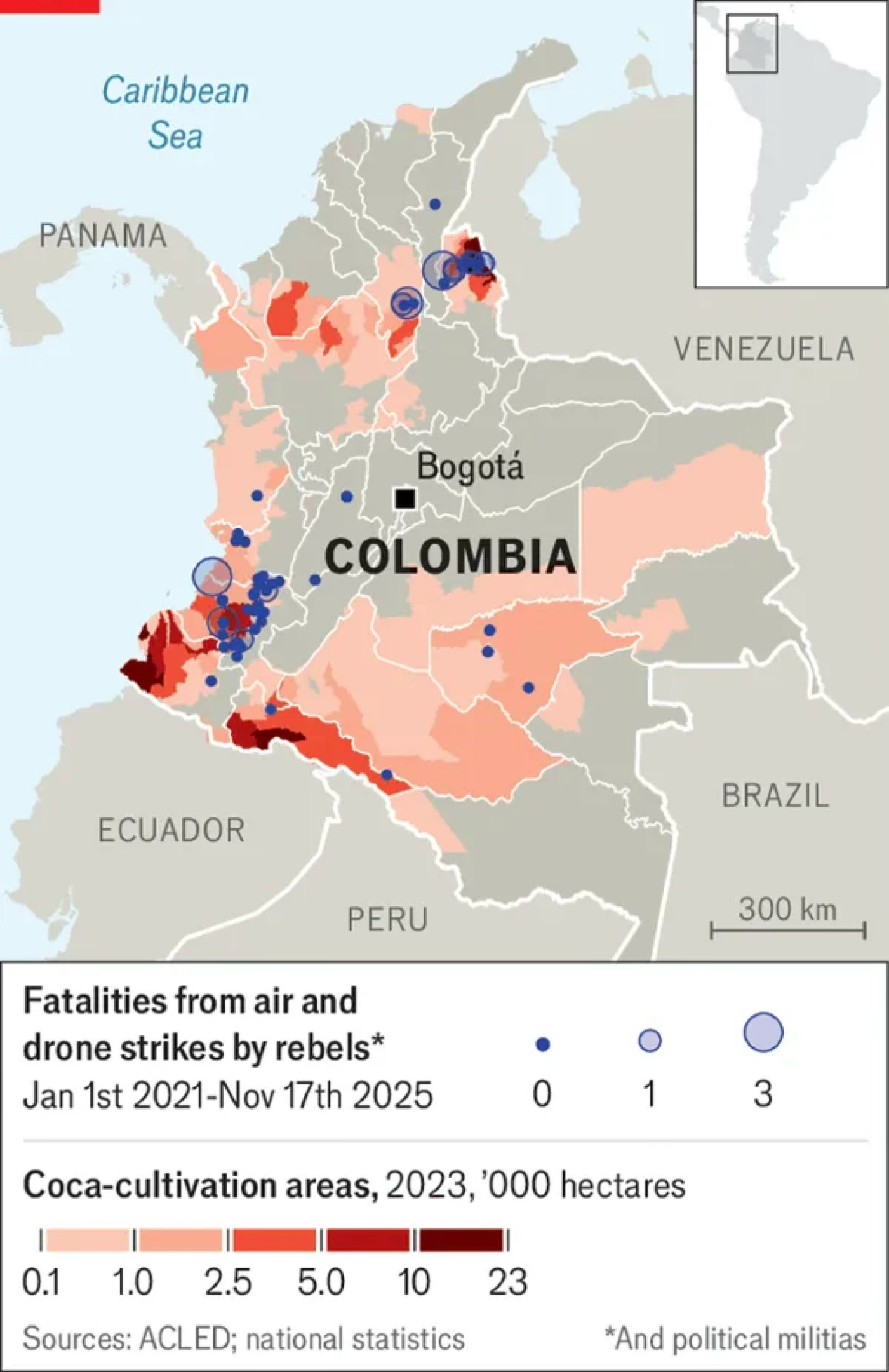
Source: The Economist
By 2040, 80% of the region’s GDP could be generated within these Green Zones, while the rest of the country falls into a vacuum of governance.
The Automation of Disinformation
Finally, remember that AI automates flight paths just as good as it scales human manipulation.
Latin America is uniquely vulnerable to cognitive warfare. There is a direct correlation between institutional trust and resilience to disinformation.
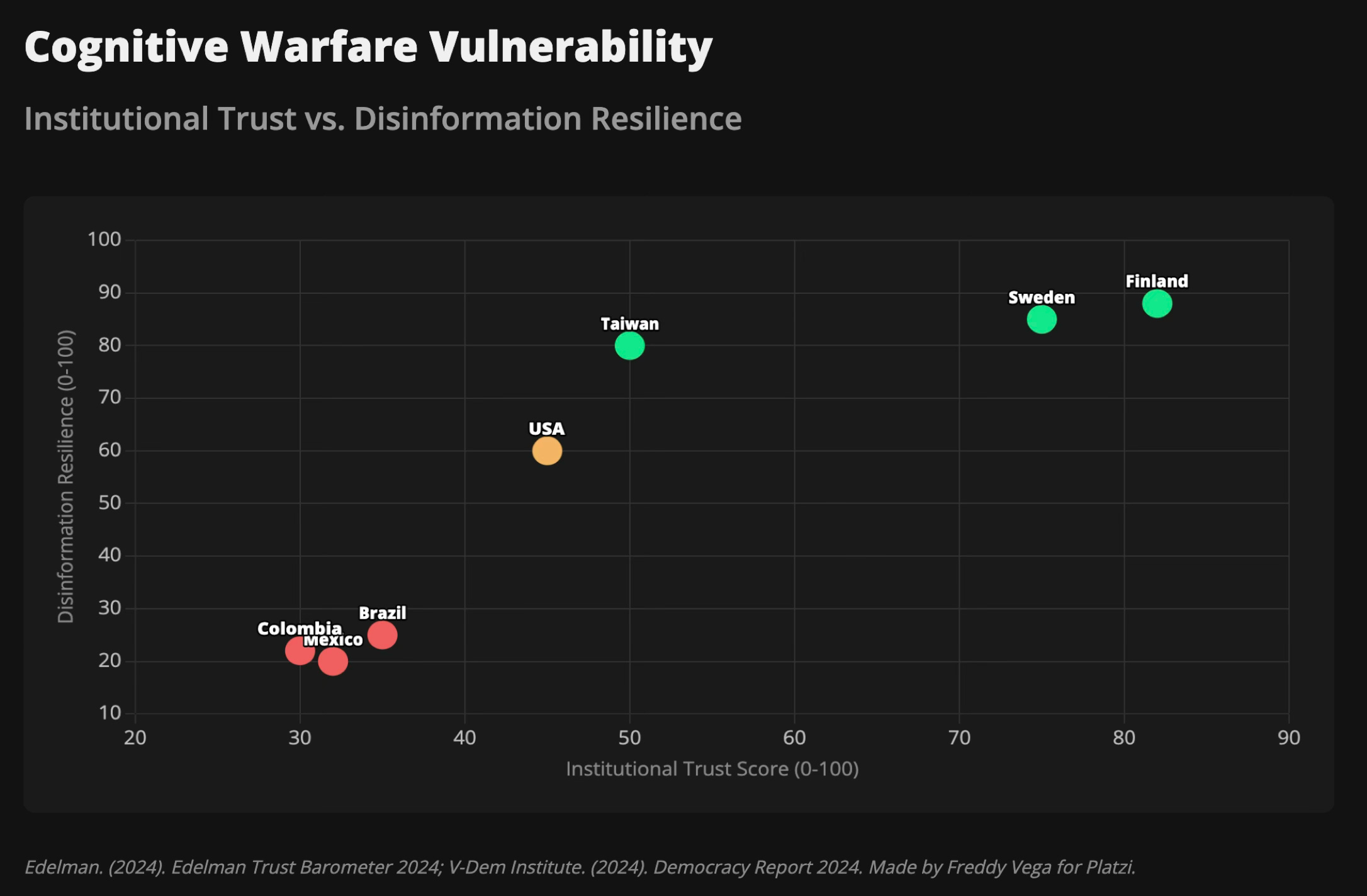
Countries like Taiwan or Finland educate their populations to spot propaganda because they have existential enemies (China and Russia). In Latin America, our trust in institutions is so low, and our “corruption fatigue” so high, that we are easy targets for AI-generated propaganda.
The Way Out
We cannot regulate our way out of this, and we cannot import our way to safety. The only sovereign defense is talent (you should learn how LLMs work, for example).
We need to stop being passive consumers of technology and start being engineers. We need to understand the math behind the models and the code behind the drones. If we don’t, we are just spectators in our own decline.
What a good time to be alive! Nice article Freddy 😎
The criminal underworld also has talent. Is the proposal to combat illegal talent with legal talent?.